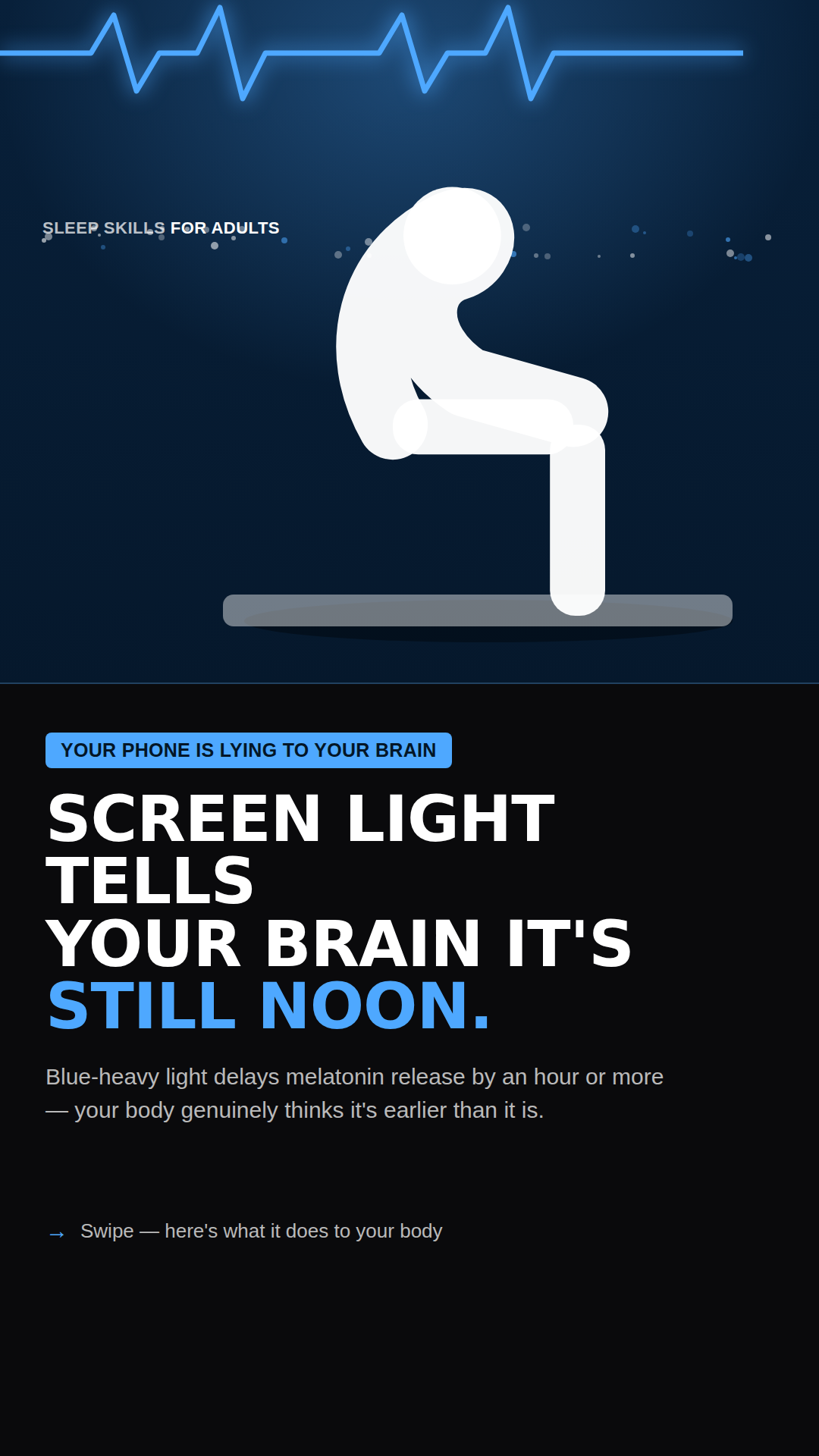
YOUR PHONE IS LYING TO YOUR BRAIN
Screen light tells your brain it's still noon.
Blue-heavy light delays melatonin release by an hour or more — your body genuinely thinks it's earlier than it is.
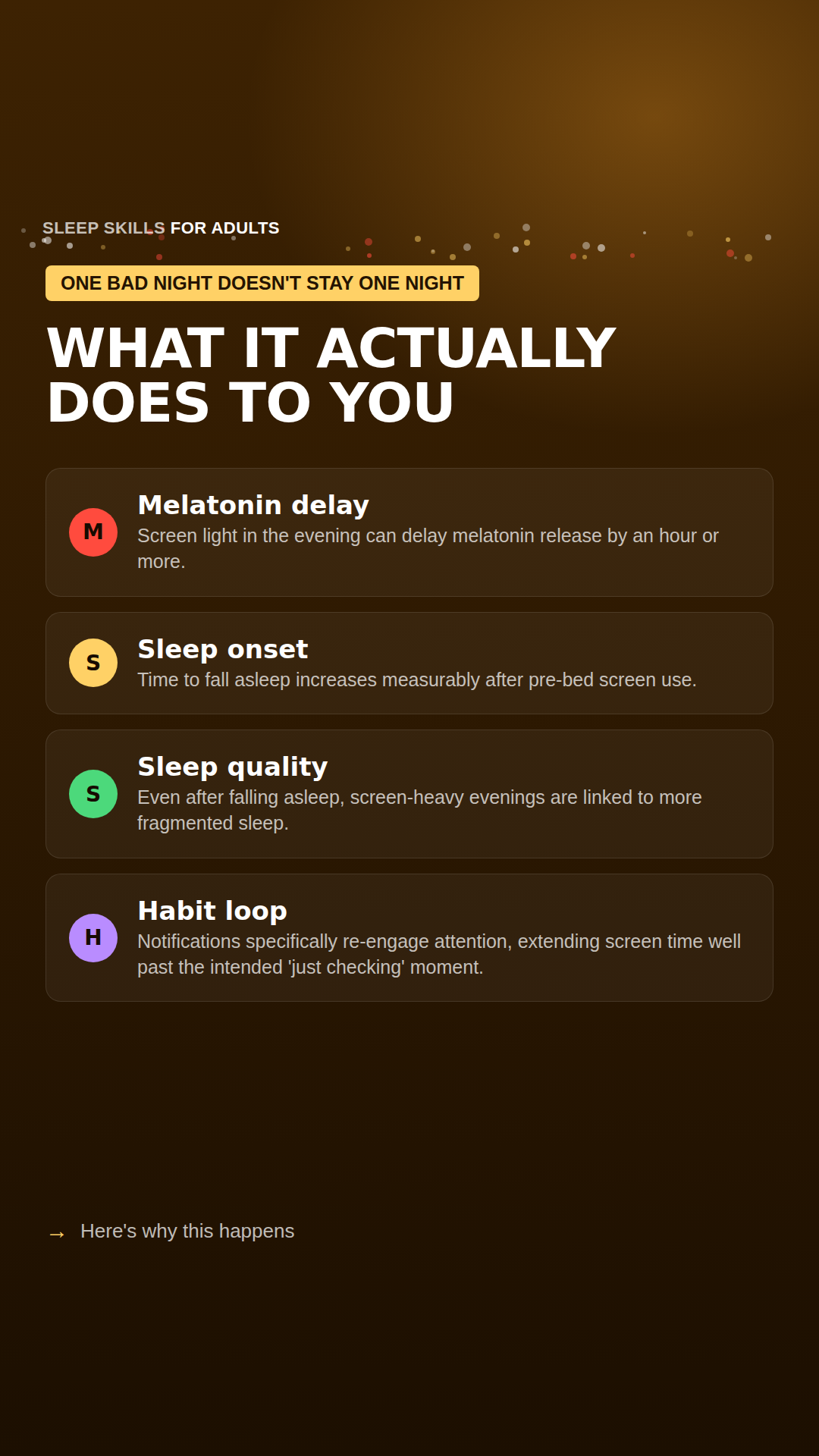
What It Actually Does to You
Melatonin delay — Screen light in the evening can delay melatonin release by an hour or more.
Sleep onset — Time to fall asleep increases measurably after pre-bed screen use.
Sleep quality — Even after falling asleep, screen-heavy evenings are linked to more fragmented sleep.
Habit loop — Notifications specifically re-engage attention, extending screen time well past the intended 'just checking' moment.
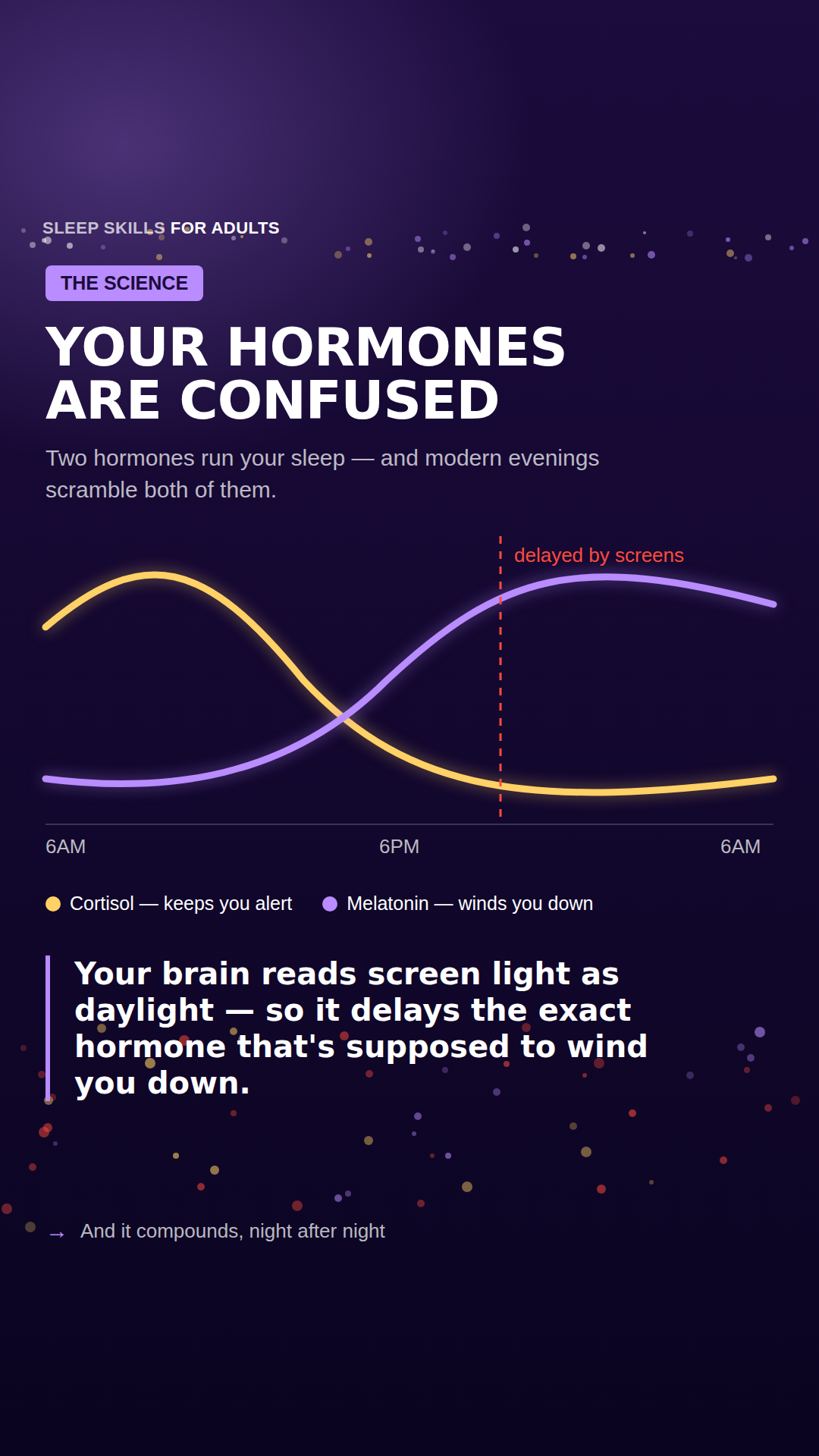
The Science
Two hormones run your sleep — and modern evenings scramble both of them. Cortisol keeps you alert; melatonin winds you down.
Your brain reads screen light as daylight — so it delays the exact hormone that's supposed to wind you down.
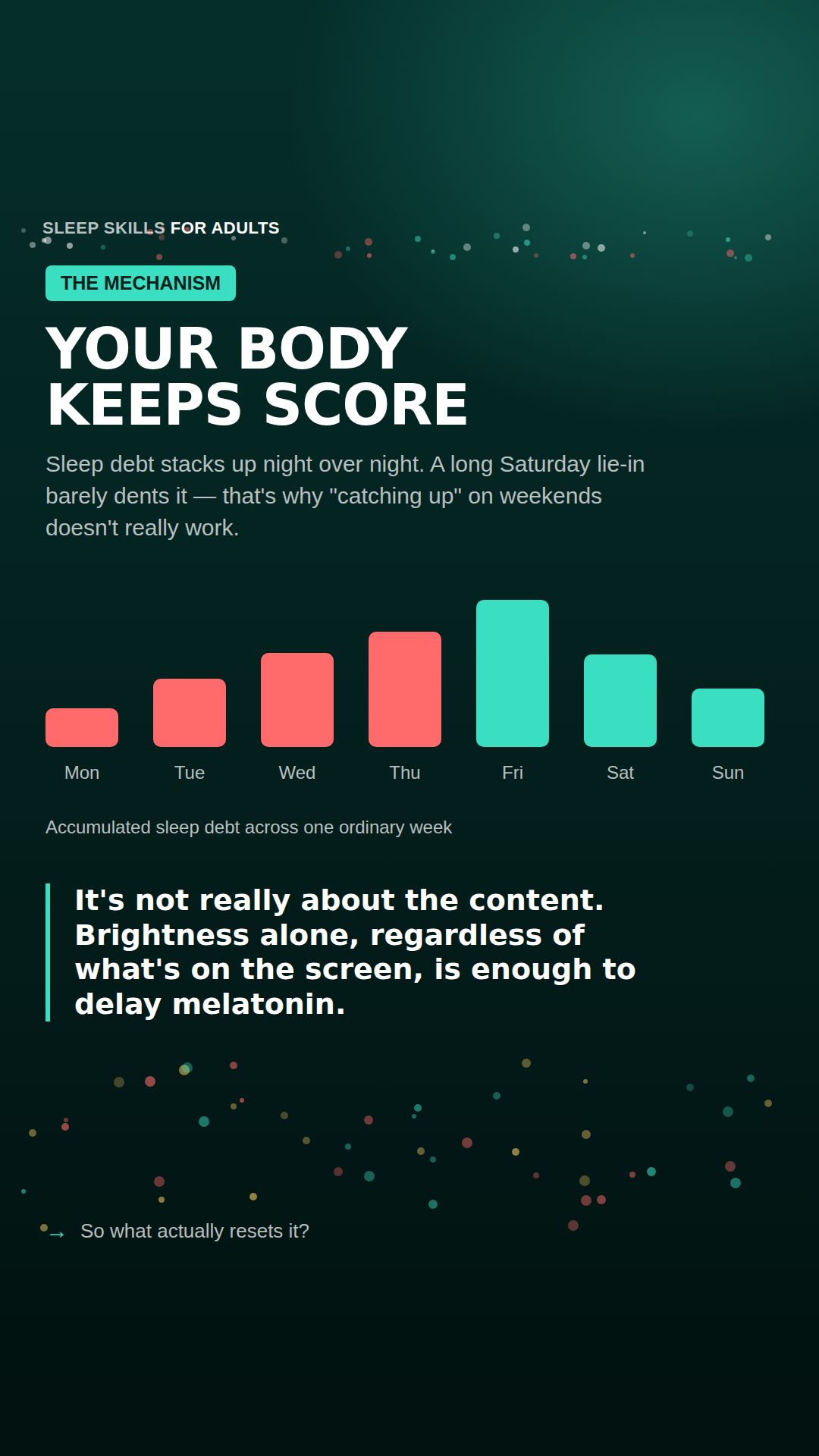
Your Body Keeps Score
Sleep debt stacks up night over night. A long Saturday lie-in barely dents it — that's why "catching up" on weekends doesn't really work.
It's not really about the content. Brightness alone, regardless of what's on the screen, is enough to delay melatonin.
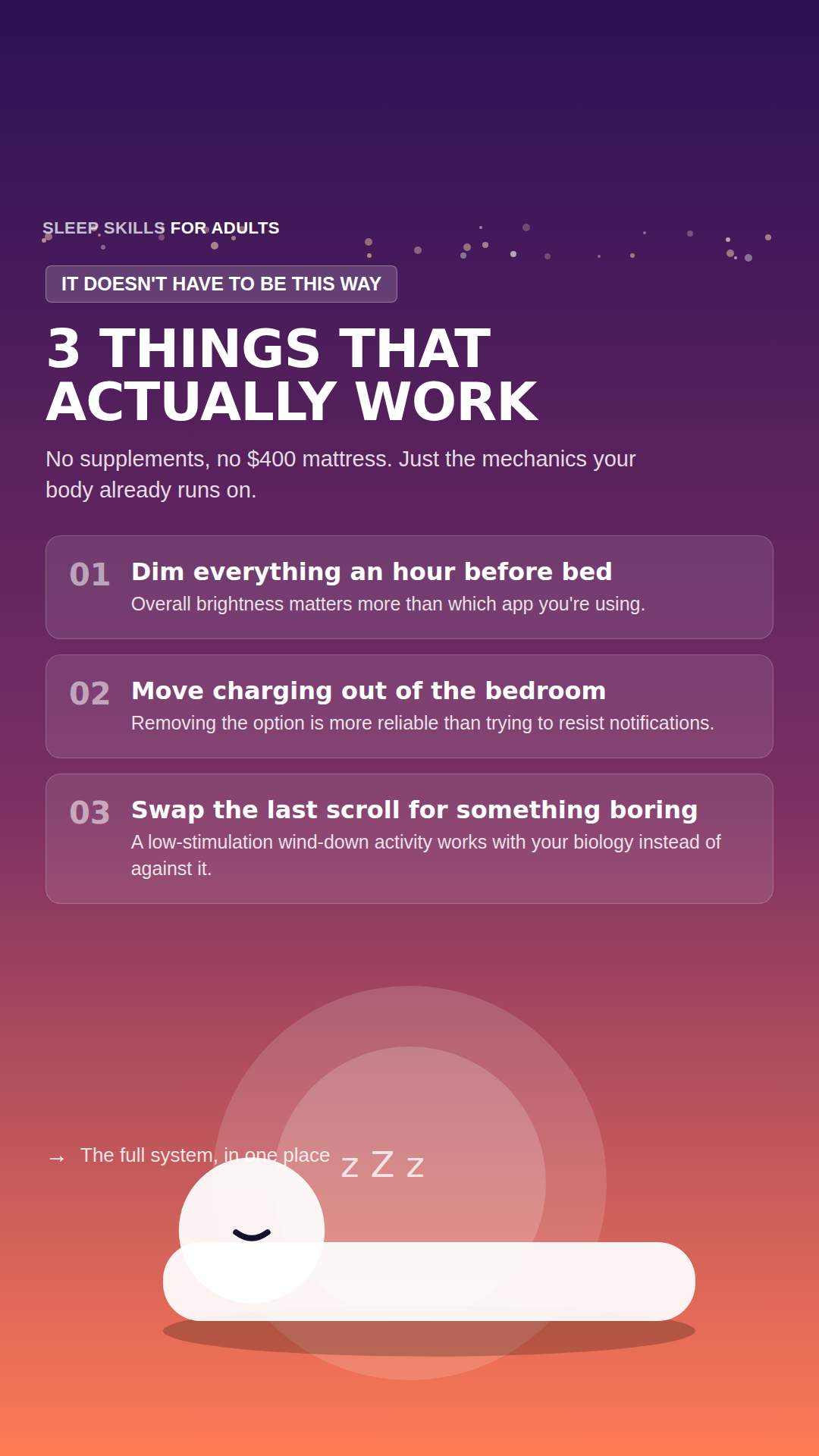
3 Things That Actually Work
- Dim everything an hour before bed — Overall brightness matters more than which app you're using.
- Move charging out of the bedroom — Removing the option is more reliable than trying to resist notifications.
- Swap the last scroll for something boring — A low-stimulation wind-down activity works with your biology instead of against it.
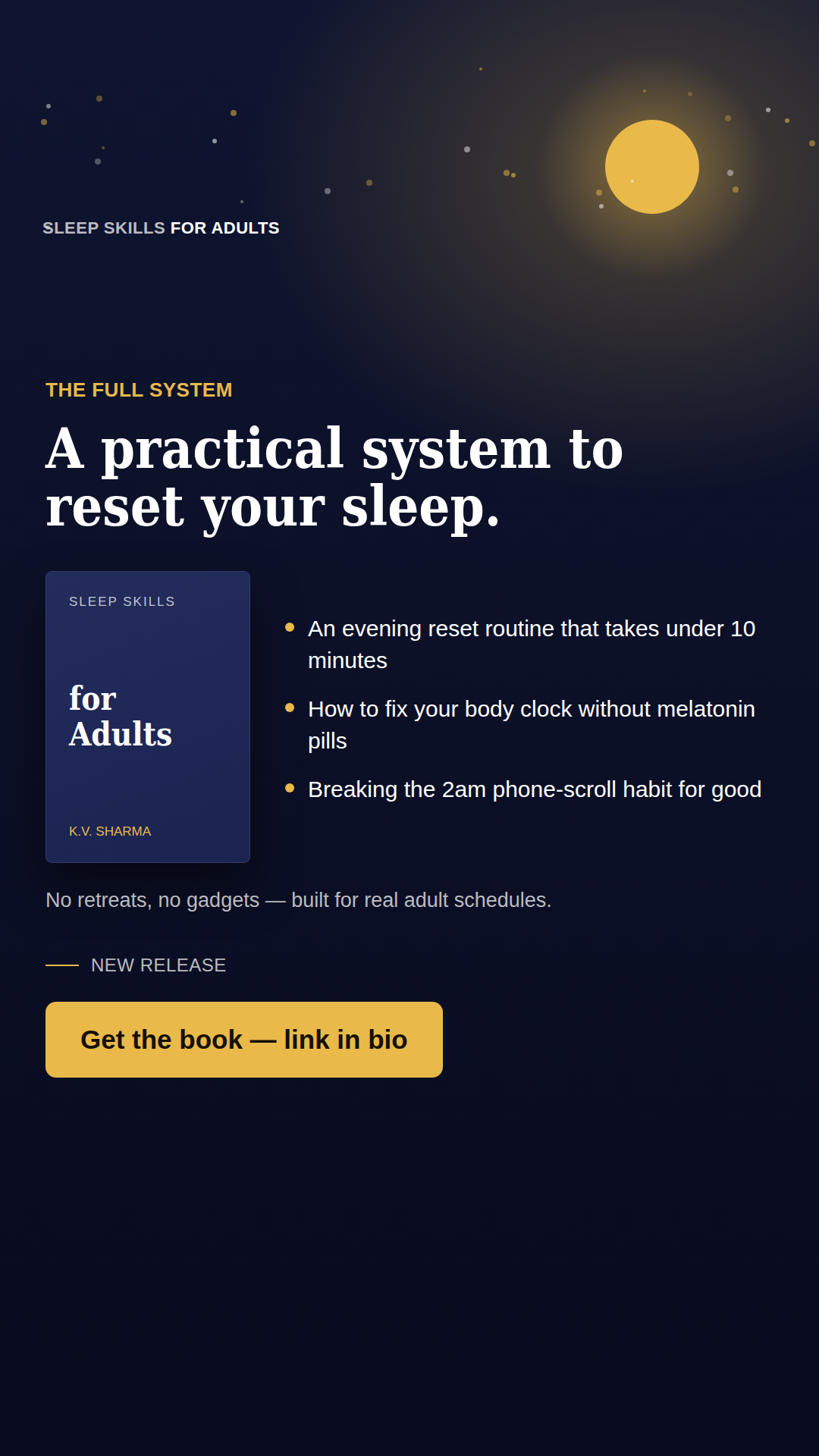
A Practical System to Reset Your Sleep
Sleep Skills for Adults — no retreats, no gadgets, built for real adult schedules. Inside:
- An evening reset routine that takes under 10 minutes
- How to fix your body clock without melatonin pills
- Breaking the 2am phone-scroll habit for good