THIS ISN'T JUST 'GETTING OLDER'
Sleep architecture actually changes with age.
Deep sleep naturally decreases with age — a specific, measurable shift, not just a vague sense of 'sleeping worse.'
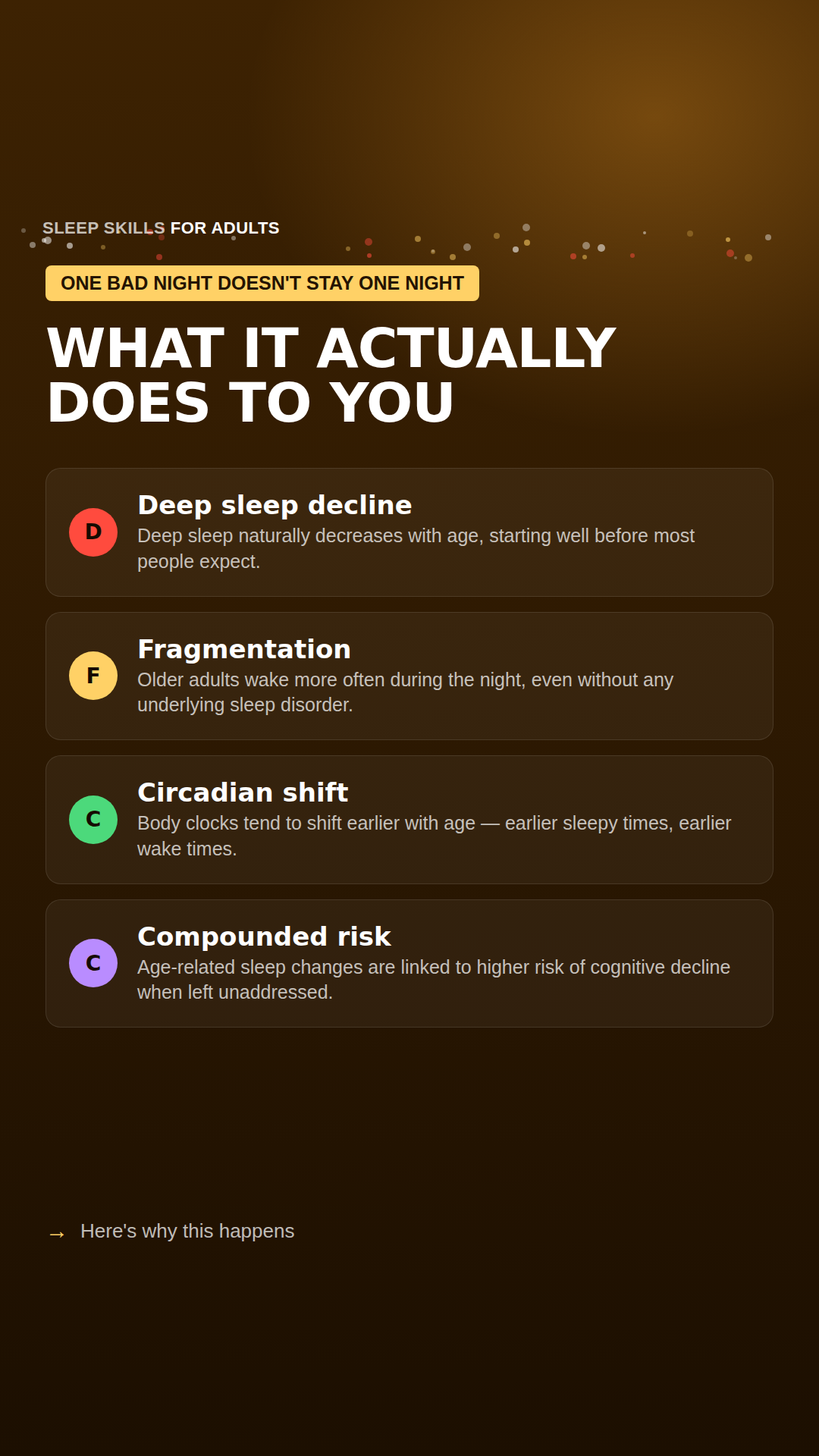
What It Actually Does to You
Deep sleep decline — Deep sleep naturally decreases with age, starting well before most people expect.
Fragmentation — Older adults wake more often during the night, even without any underlying sleep disorder.
Circadian shift — Body clocks tend to shift earlier with age — earlier sleepy times, earlier wake times.
Compounded risk — Age-related sleep changes are linked to higher risk of cognitive decline when left unaddressed.
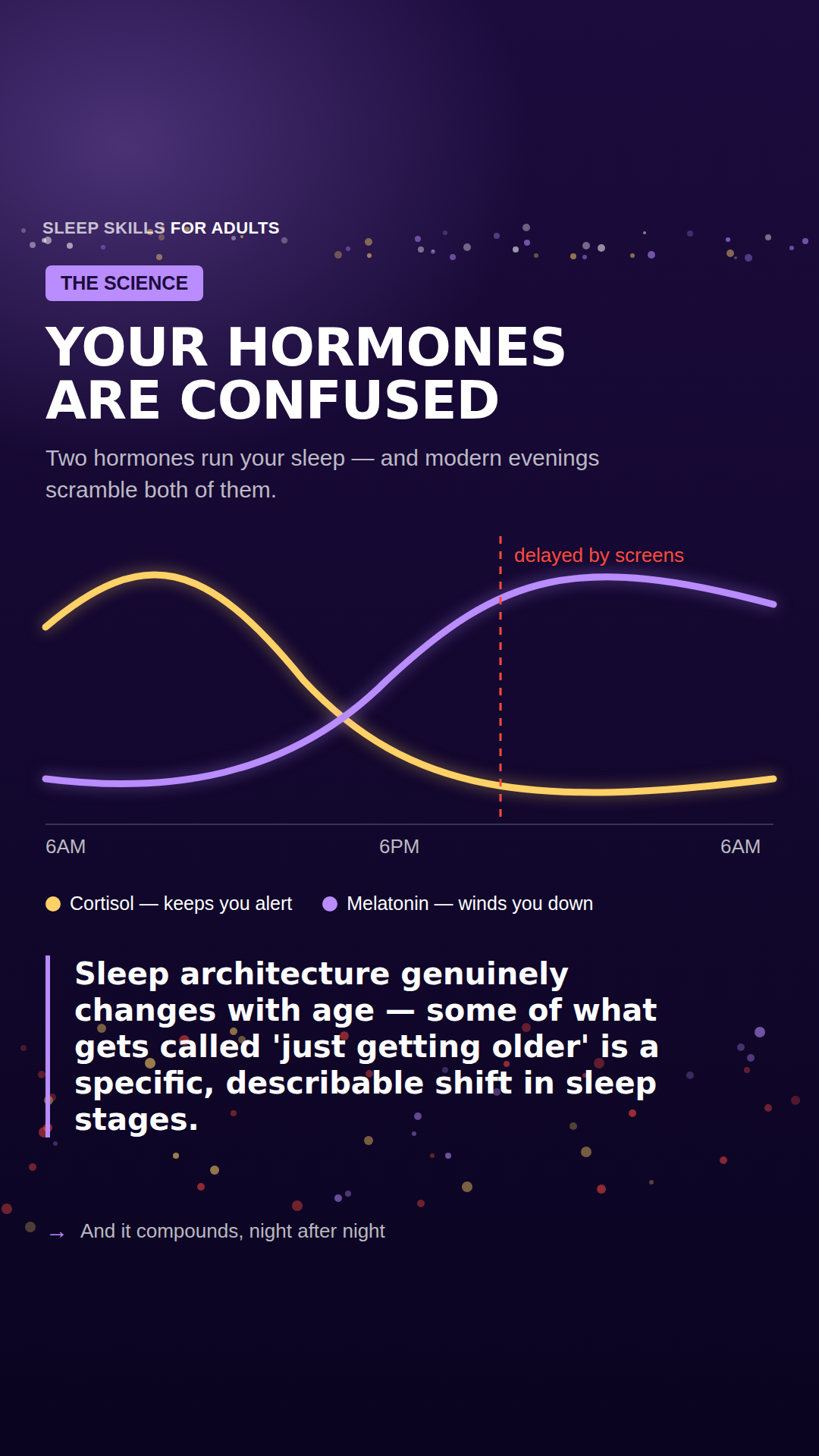
The Science
Two hormones run your sleep — and modern evenings scramble both of them. Cortisol keeps you alert; melatonin winds you down.
Sleep architecture genuinely changes with age — some of what gets called 'just getting older' is a specific, describable shift in sleep stages.
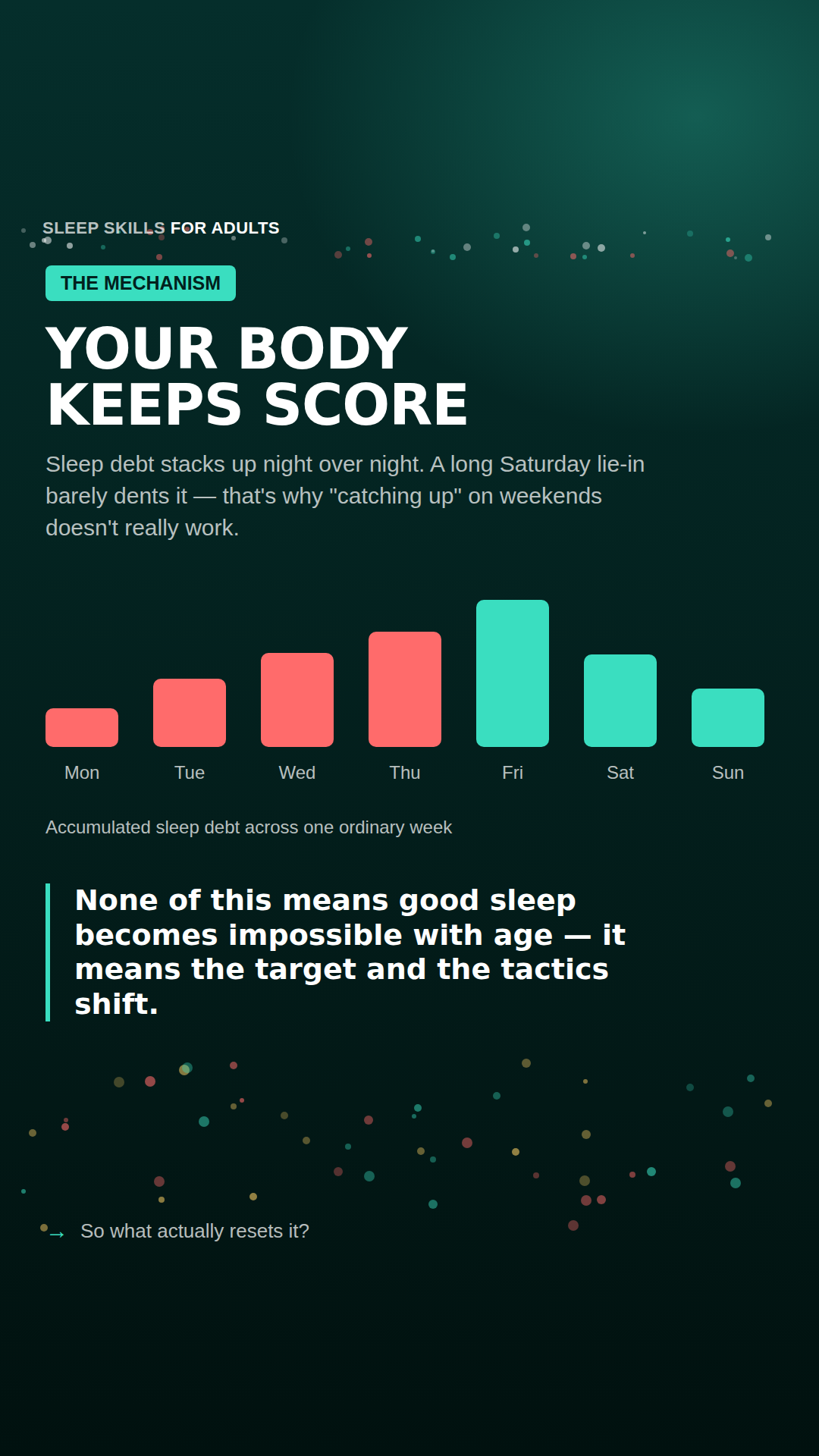
Your Body Keeps Score
Sleep debt stacks up night over night. A long Saturday lie-in barely dents it — that's why "catching up" on weekends doesn't really work.
None of this means good sleep becomes impossible with age — it means the target and the tactics shift.
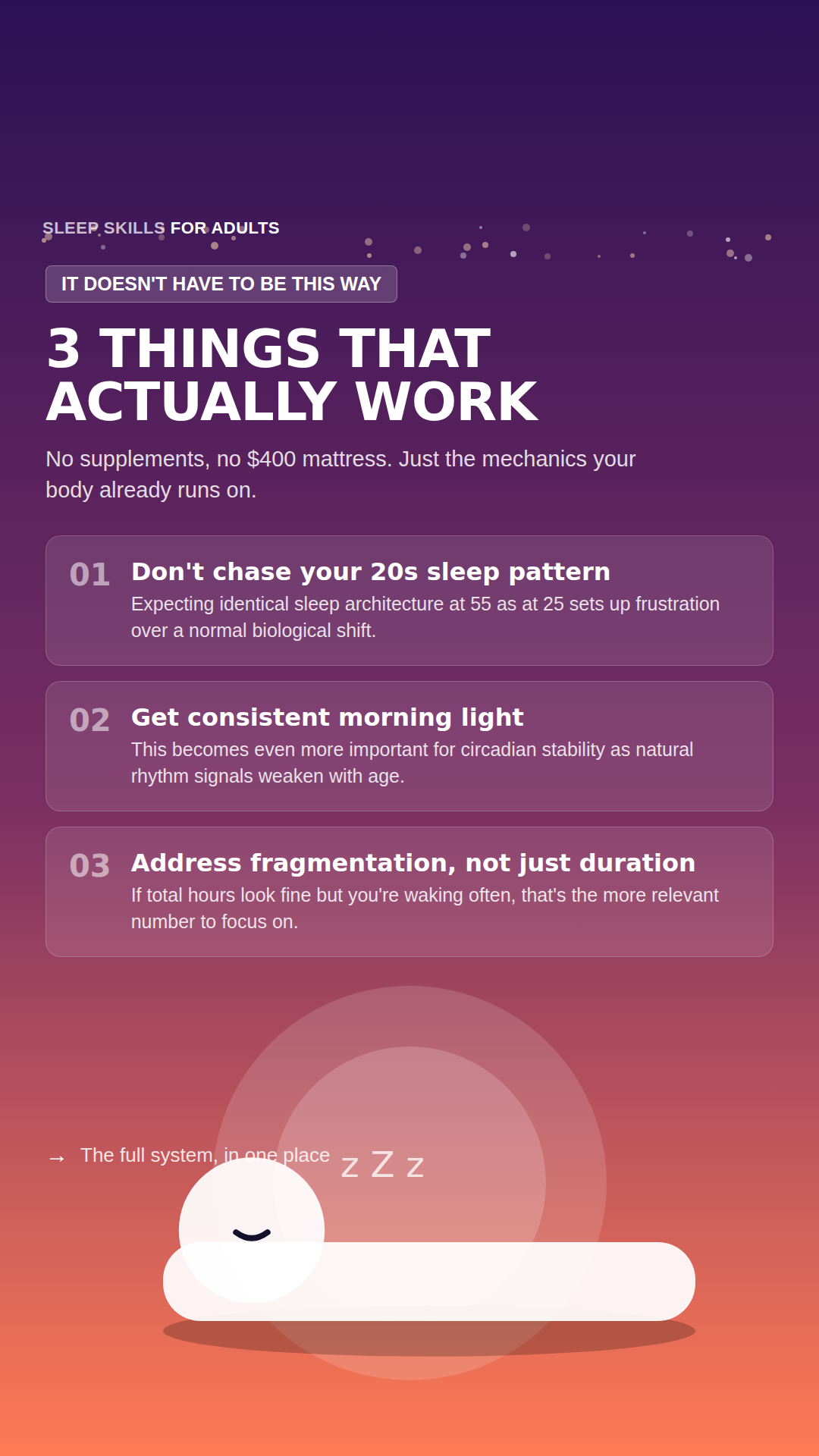
3 Things That Actually Work
- Don't chase your 20s sleep pattern — Expecting identical sleep architecture at 55 as at 25 sets up frustration over a normal biological shift.
- Get consistent morning light — This becomes even more important for circadian stability as natural rhythm signals weaken with age.
- Address fragmentation, not just duration — If total hours look fine but you're waking often, that's the more relevant number to focus on.
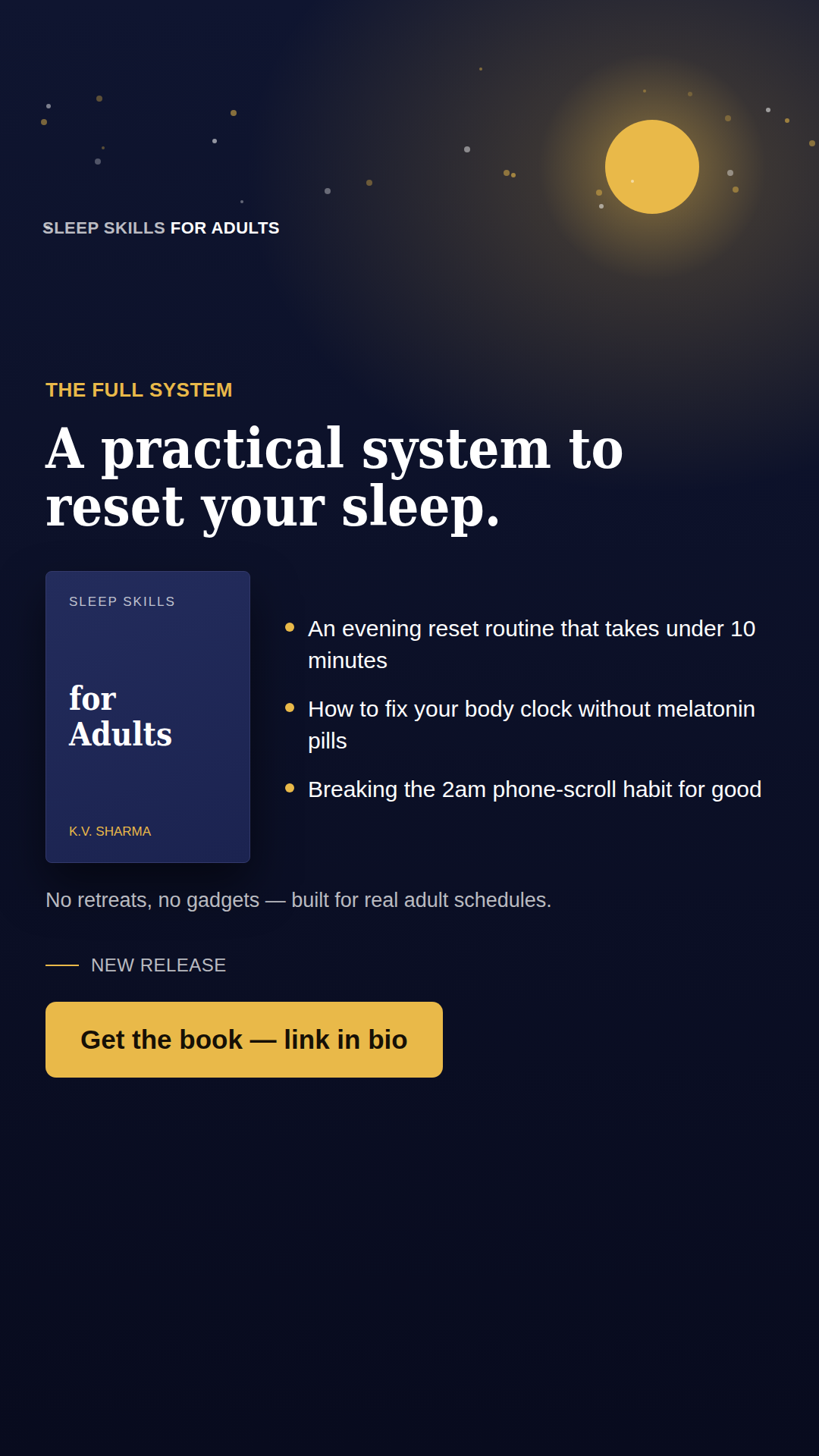
A Practical System to Reset Your Sleep
Sleep Skills for Adults — no retreats, no gadgets, built for real adult schedules. Inside:
- An evening reset routine that takes under 10 minutes
- How to fix your body clock without melatonin pills
- Breaking the 2am phone-scroll habit for good