THE SETTING NOBODY CHECKS
Your room is probably too warm to sleep well.
Sleep onset requires your core temperature to drop — most bedrooms run warmer than the range that makes that easy.
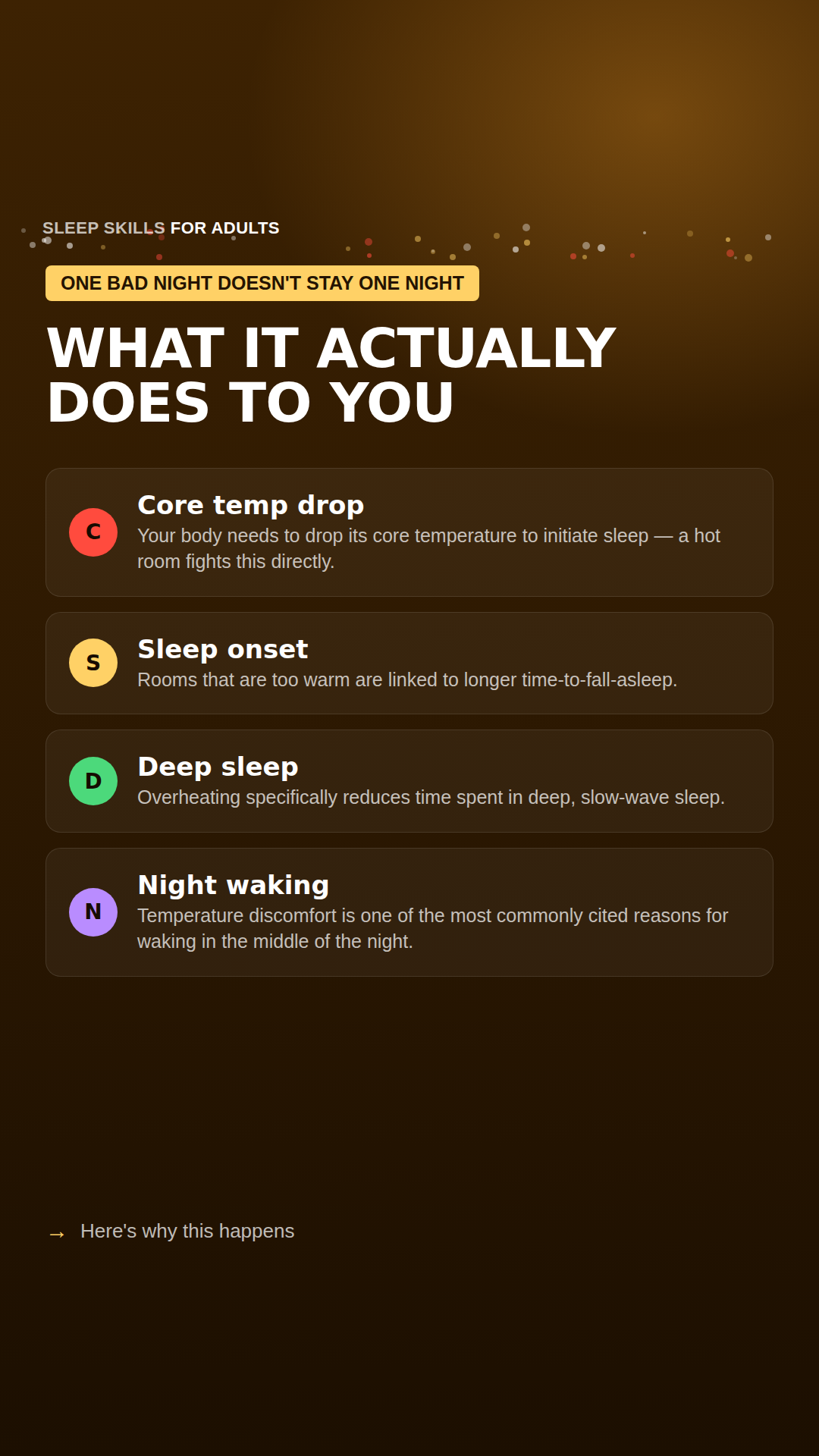
What It Actually Does to You
Core temp drop — Your body needs to drop its core temperature to initiate sleep — a hot room fights this directly.
Sleep onset — Rooms that are too warm are linked to longer time-to-fall-asleep.
Deep sleep — Overheating specifically reduces time spent in deep, slow-wave sleep.
Night waking — Temperature discomfort is one of the most commonly cited reasons for waking in the middle of the night.
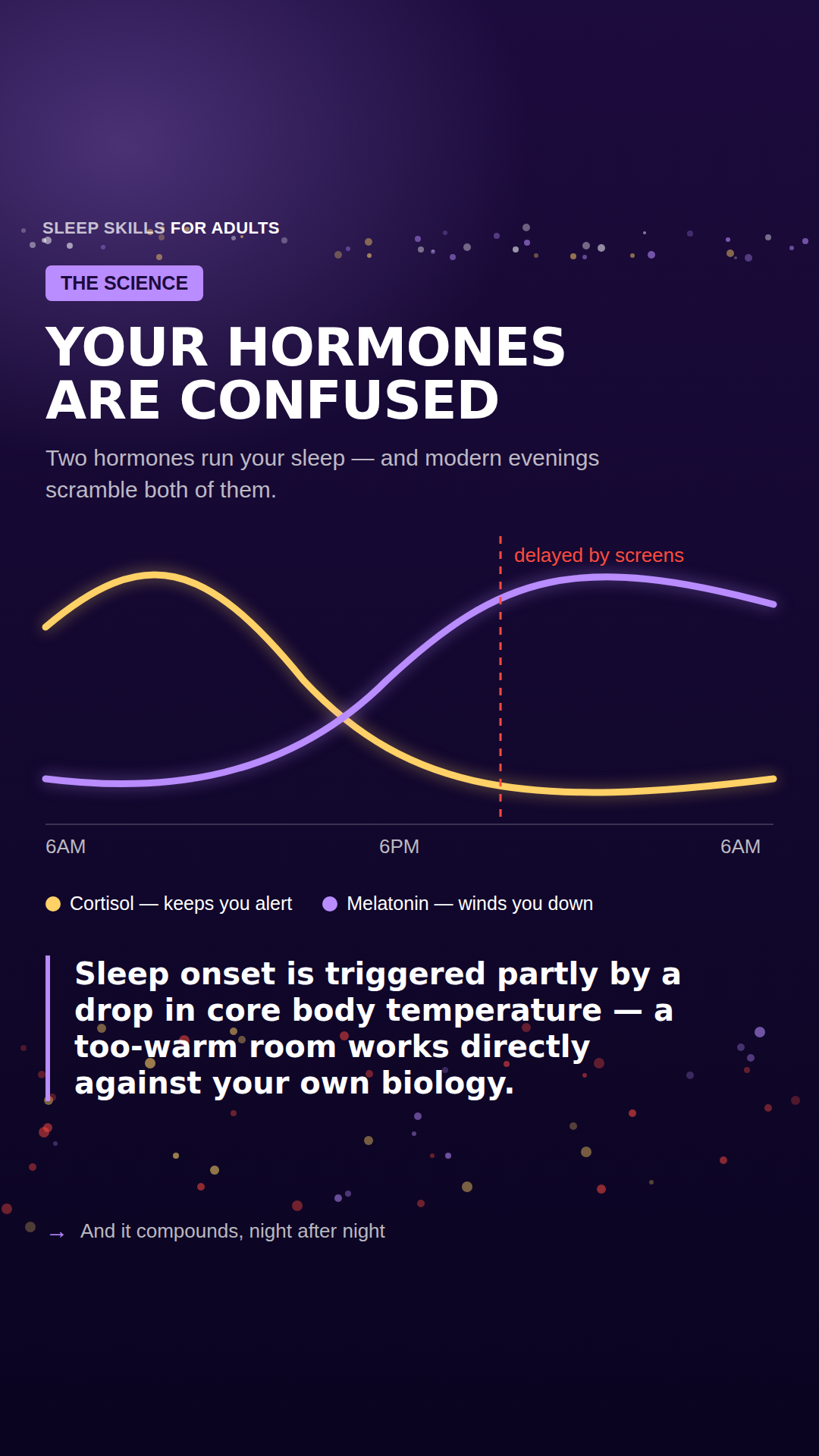
The Science
Two hormones run your sleep — and modern evenings scramble both of them. Cortisol keeps you alert; melatonin winds you down.
Sleep onset is triggered partly by a drop in core body temperature — a too-warm room works directly against your own biology.
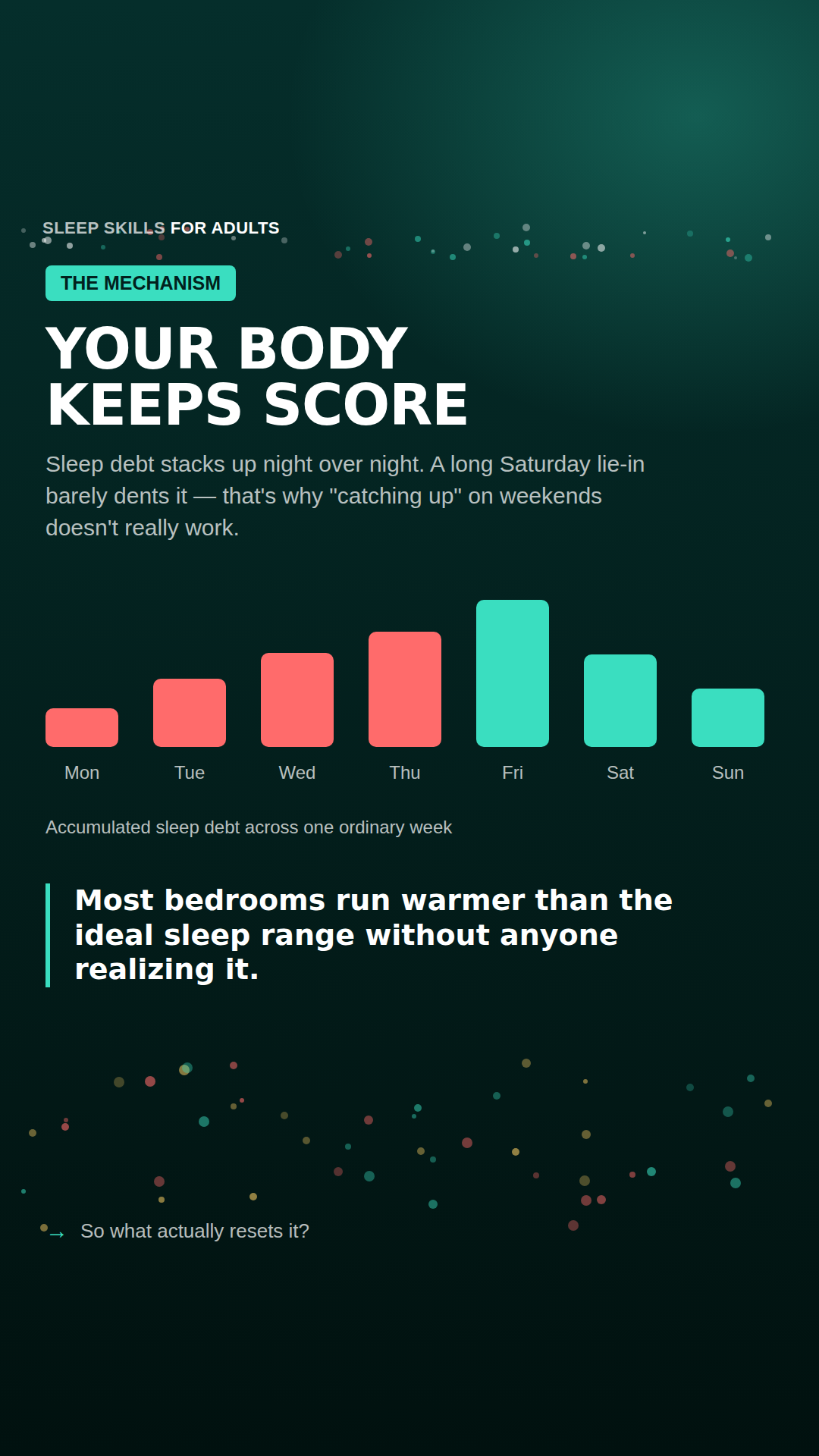
Your Body Keeps Score
Sleep debt stacks up night over night. A long Saturday lie-in barely dents it — that's why "catching up" on weekends doesn't really work.
Most bedrooms run warmer than the ideal sleep range without anyone realizing it.
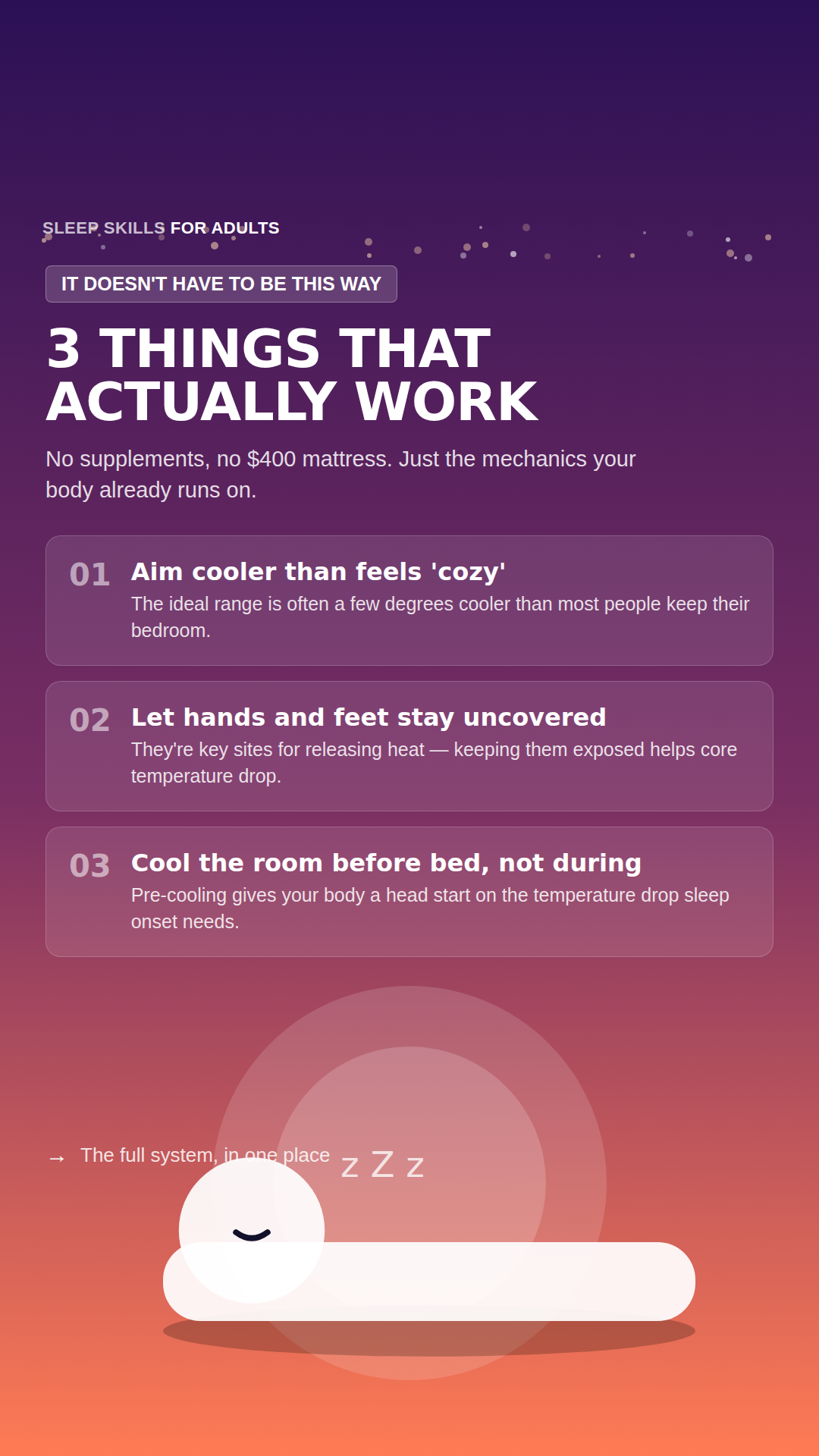
3 Things That Actually Work
- Aim cooler than feels 'cozy' — The ideal range is often a few degrees cooler than most people keep their bedroom.
- Let hands and feet stay uncovered — They're key sites for releasing heat — keeping them exposed helps core temperature drop.
- Cool the room before bed, not during — Pre-cooling gives your body a head start on the temperature drop sleep onset needs.
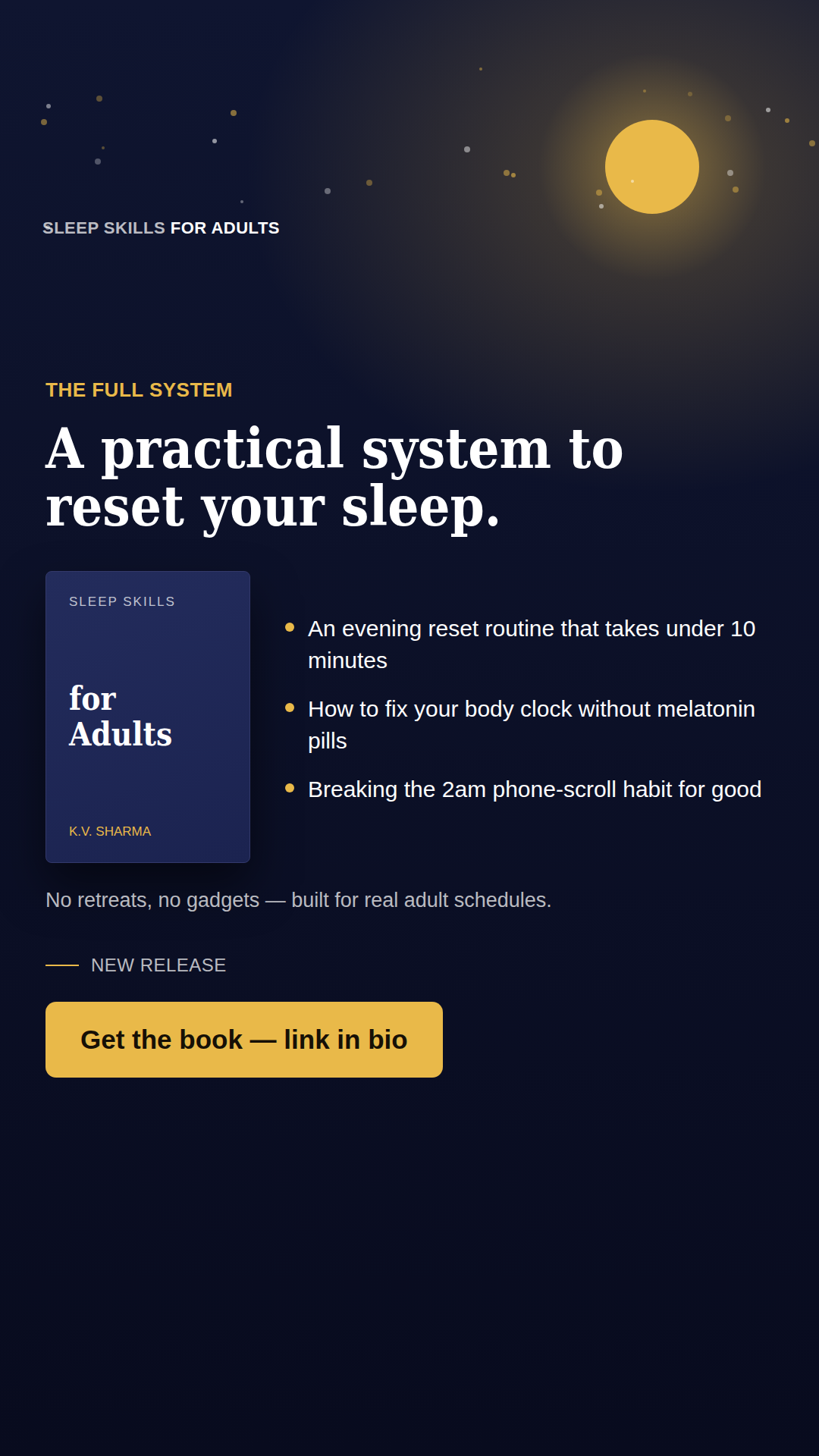
A Practical System to Reset Your Sleep
Sleep Skills for Adults — no retreats, no gadgets, built for real adult schedules. Inside:
- An evening reset routine that takes under 10 minutes
- How to fix your body clock without melatonin pills
- Breaking the 2am phone-scroll habit for good