IT'S NOT ABOUT THE DISHES
That argument was really about your sleep.
Sleep-deprived couples report more frequent, more intense conflict — often about things that wouldn't register on a good night.
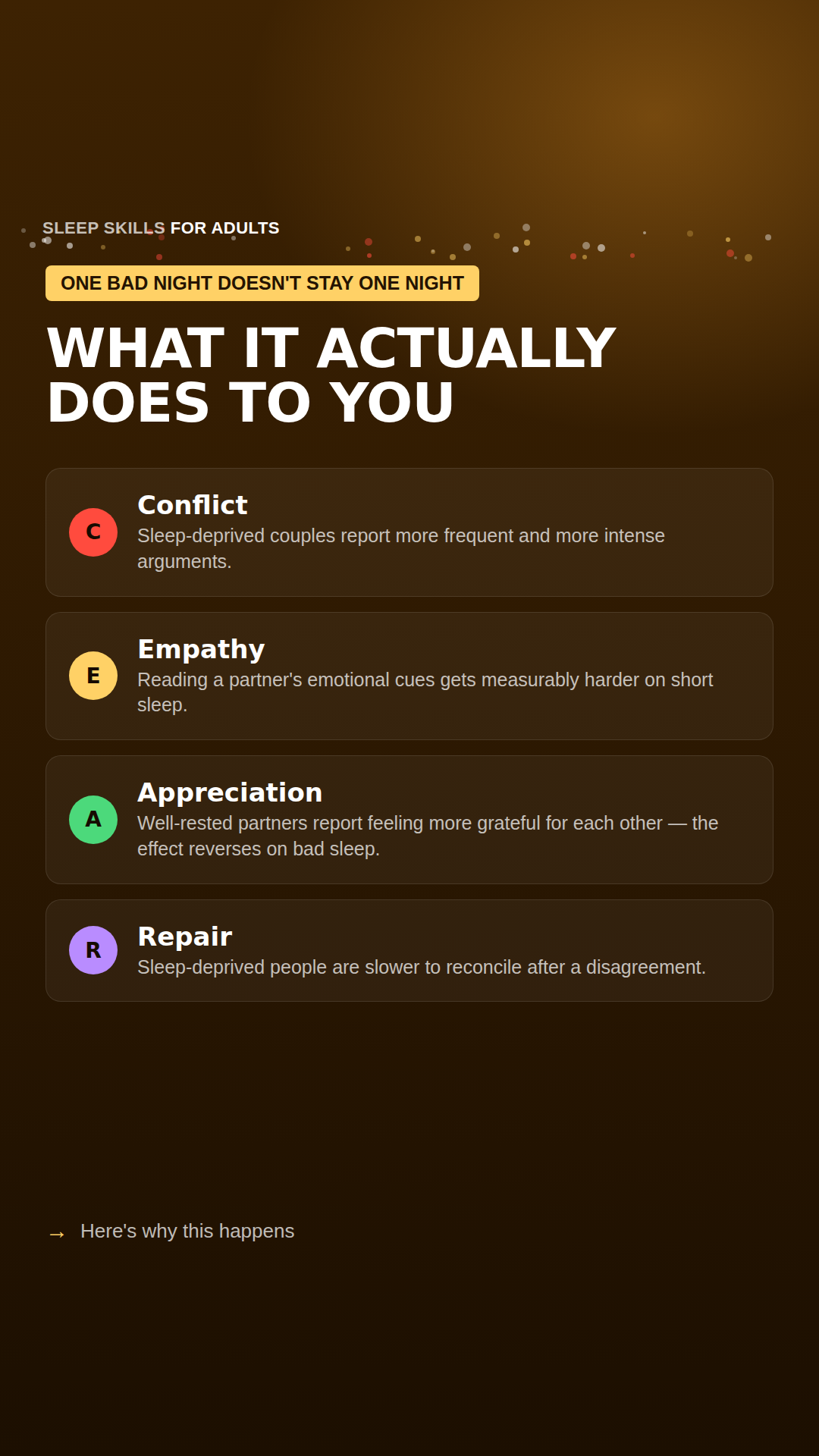
What It Actually Does to You
Conflict — Sleep-deprived couples report more frequent and more intense arguments.
Empathy — Reading a partner's emotional cues gets measurably harder on short sleep.
Appreciation — Well-rested partners report feeling more grateful for each other — the effect reverses on bad sleep.
Repair — Sleep-deprived people are slower to reconcile after a disagreement.
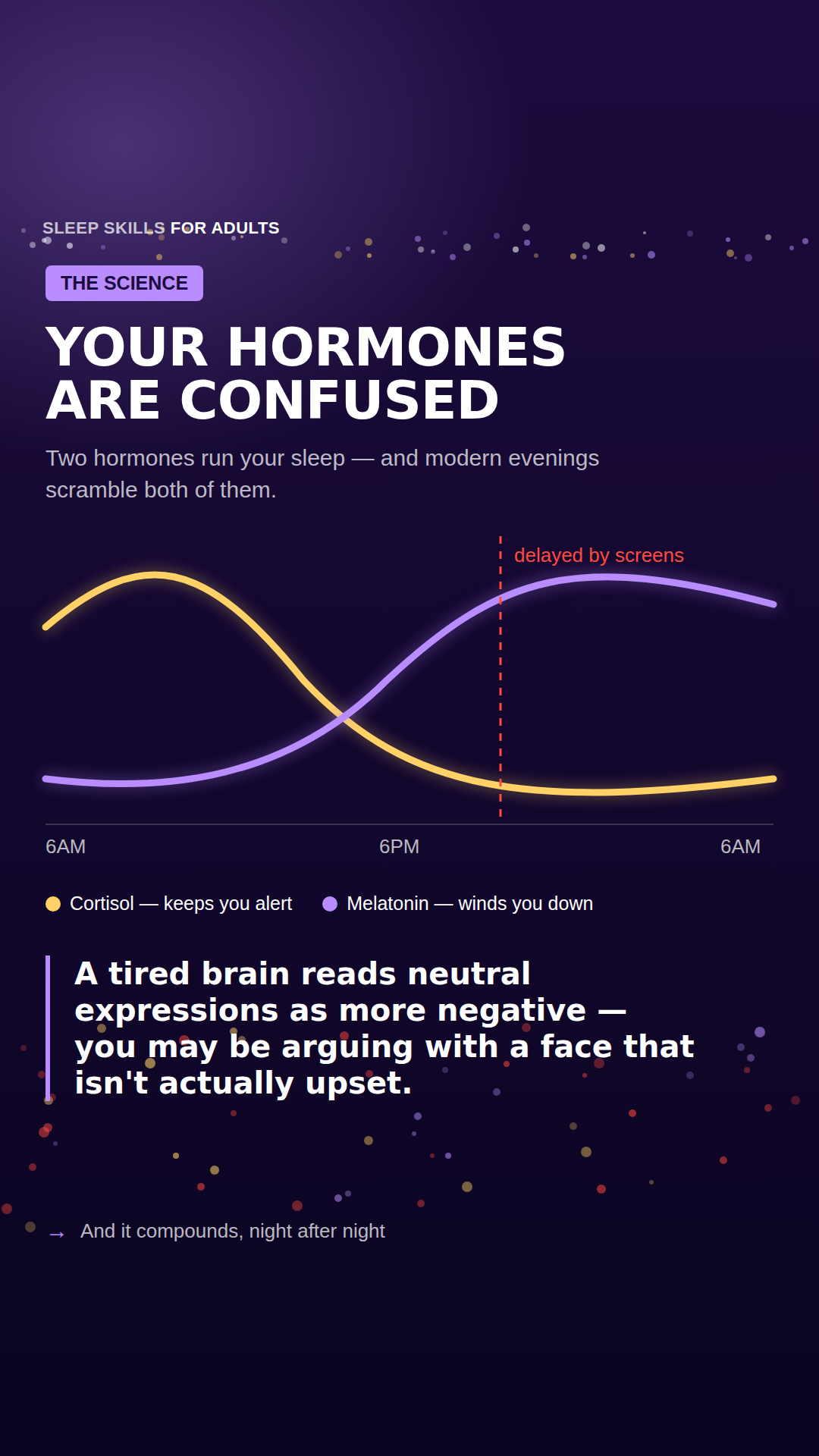
The Science
Two hormones run your sleep — and modern evenings scramble both of them. Cortisol keeps you alert; melatonin winds you down.
A tired brain reads neutral expressions as more negative — you may be arguing with a face that isn't actually upset.
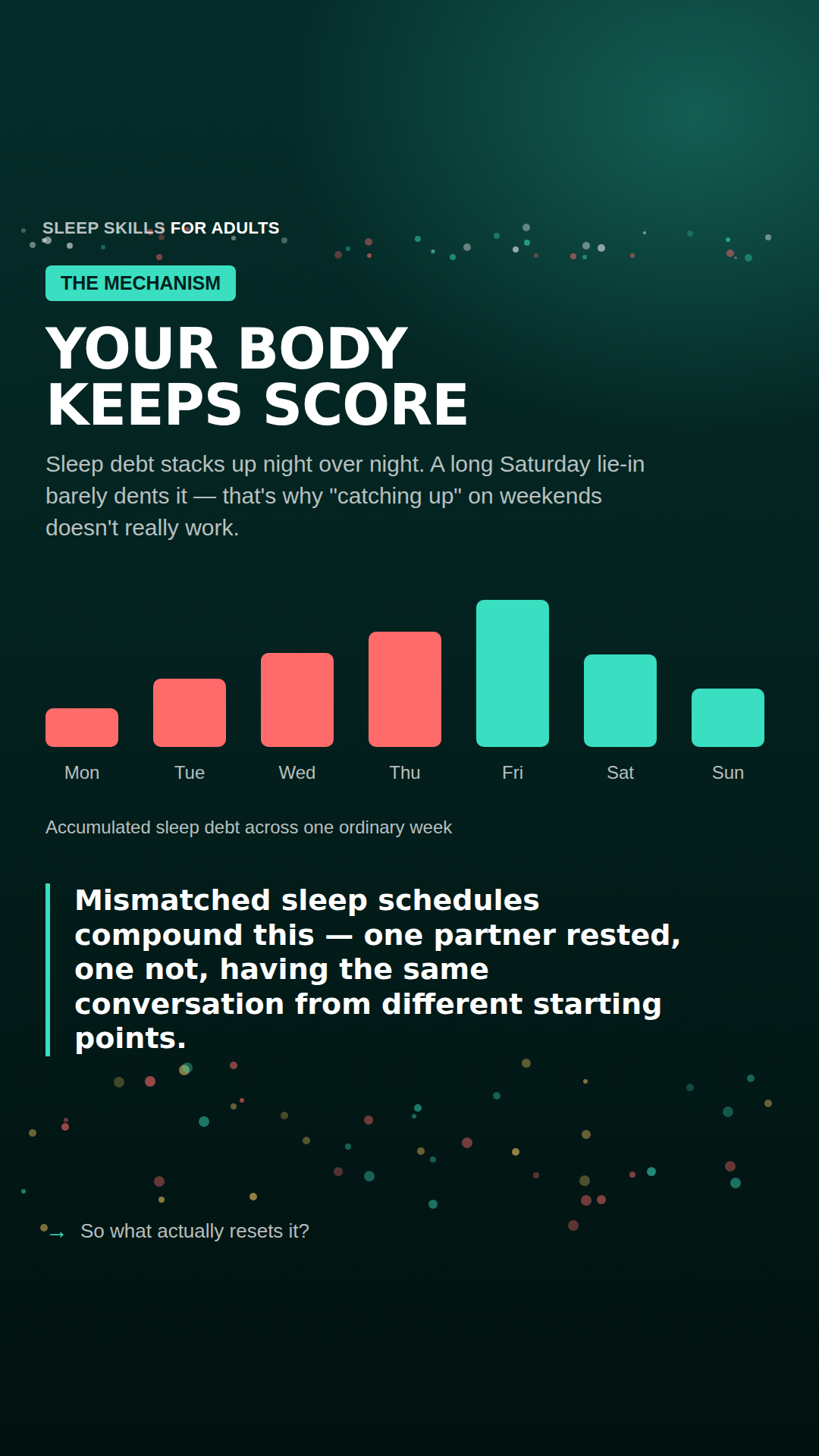
Your Body Keeps Score
Sleep debt stacks up night over night. A long Saturday lie-in barely dents it — that's why "catching up" on weekends doesn't really work.
Mismatched sleep schedules compound this — one partner rested, one not, having the same conversation from different starting points.
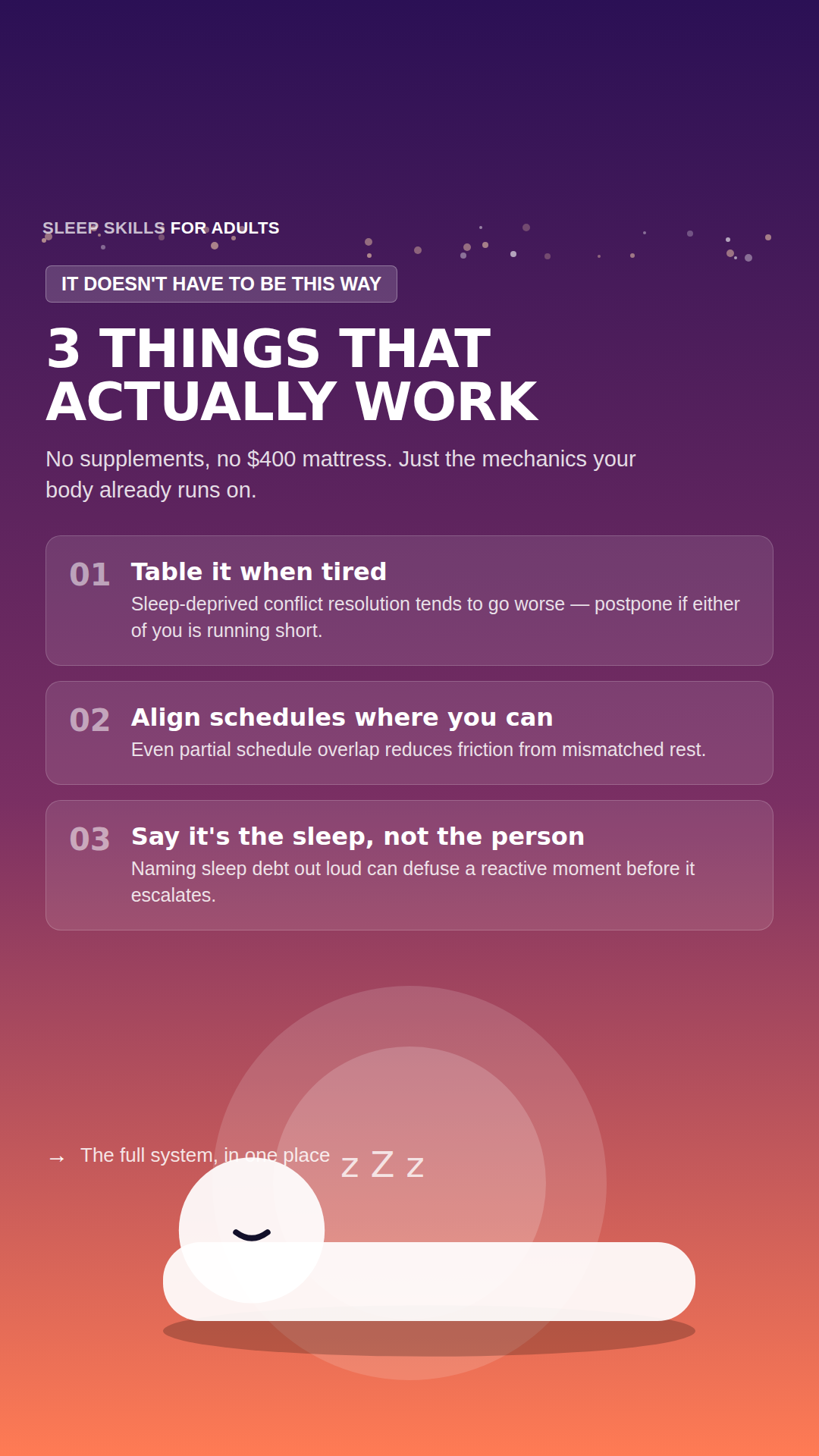
3 Things That Actually Work
- Table it when tired — Sleep-deprived conflict resolution tends to go worse — postpone if either of you is running short.
- Align schedules where you can — Even partial schedule overlap reduces friction from mismatched rest.
- Say it's the sleep, not the person — Naming sleep debt out loud can defuse a reactive moment before it escalates.
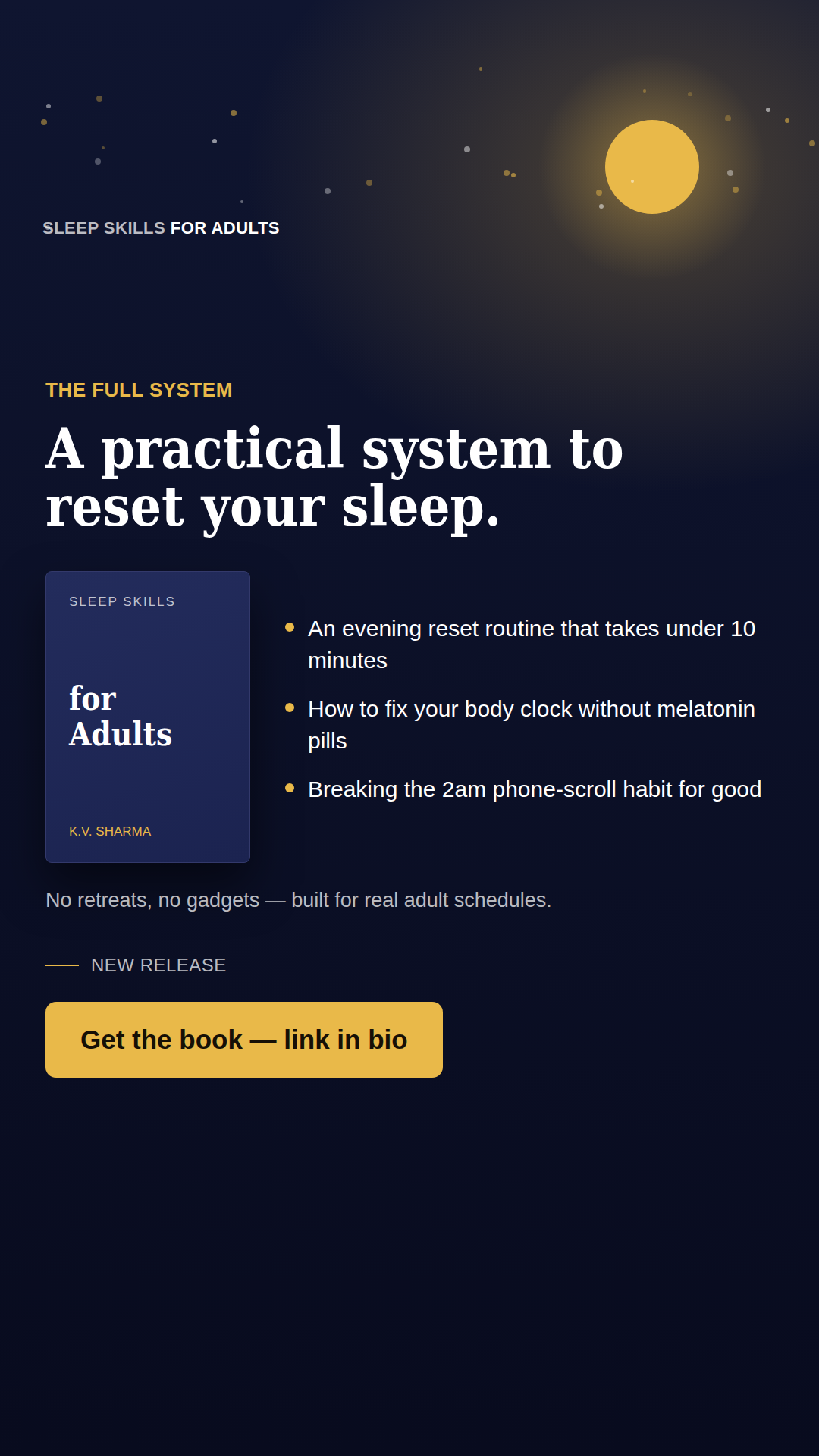
A Practical System to Reset Your Sleep
Sleep Skills for Adults — no retreats, no gadgets, built for real adult schedules. Inside:
- An evening reset routine that takes under 10 minutes
- How to fix your body clock without melatonin pills
- Breaking the 2am phone-scroll habit for good