THIS IS A DIFFERENT KIND OF TIRED
New-parent exhaustion is chronic, not just a rough week.
New parents often run a sustained sleep debt for months — a genuinely different category from occasional short nights.
What It Actually Does to You
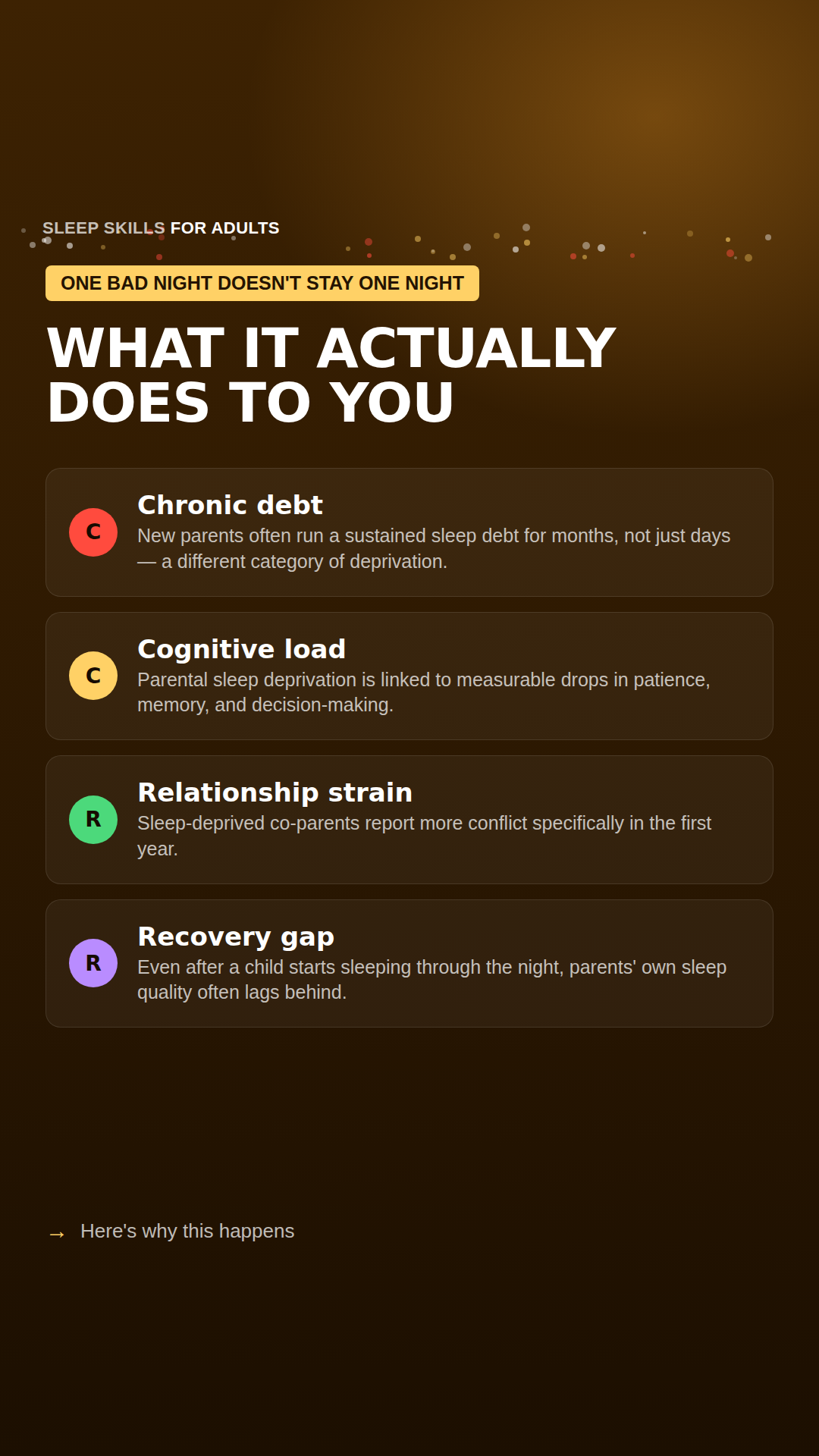
Chronic debt — New parents often run a sustained sleep debt for months, not just days — a different category of deprivation.
Cognitive load — Parental sleep deprivation is linked to measurable drops in patience, memory, and decision-making.
Relationship strain — Sleep-deprived co-parents report more conflict specifically in the first year.
Recovery gap — Even after a child starts sleeping through the night, parents' own sleep quality often lags behind.
The Science
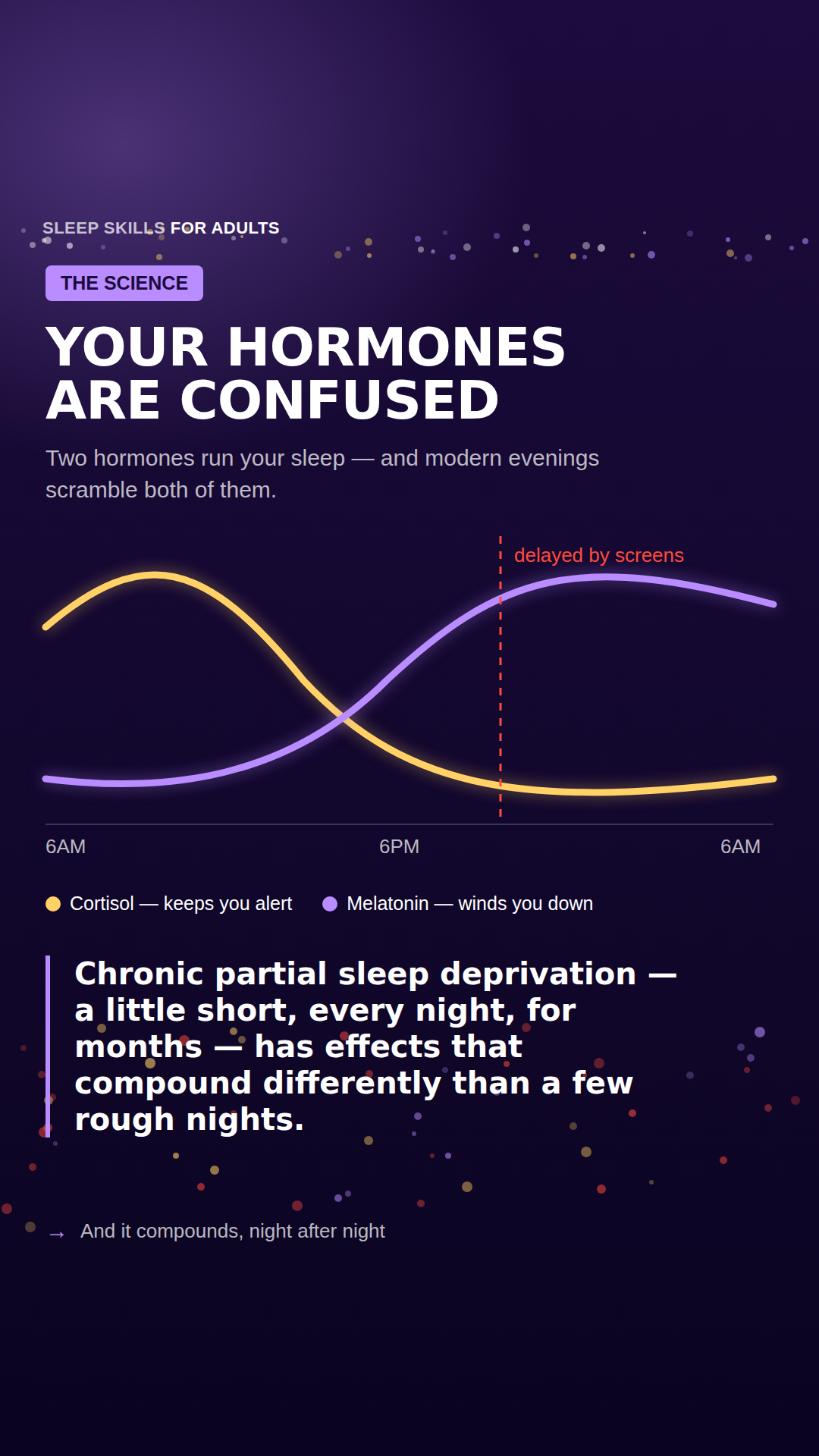
Two hormones run your sleep — and modern evenings scramble both of them. Cortisol keeps you alert; melatonin winds you down.
Chronic partial sleep deprivation — a little short, every night, for months — has effects that compound differently than a few rough nights.
Your Body Keeps Score
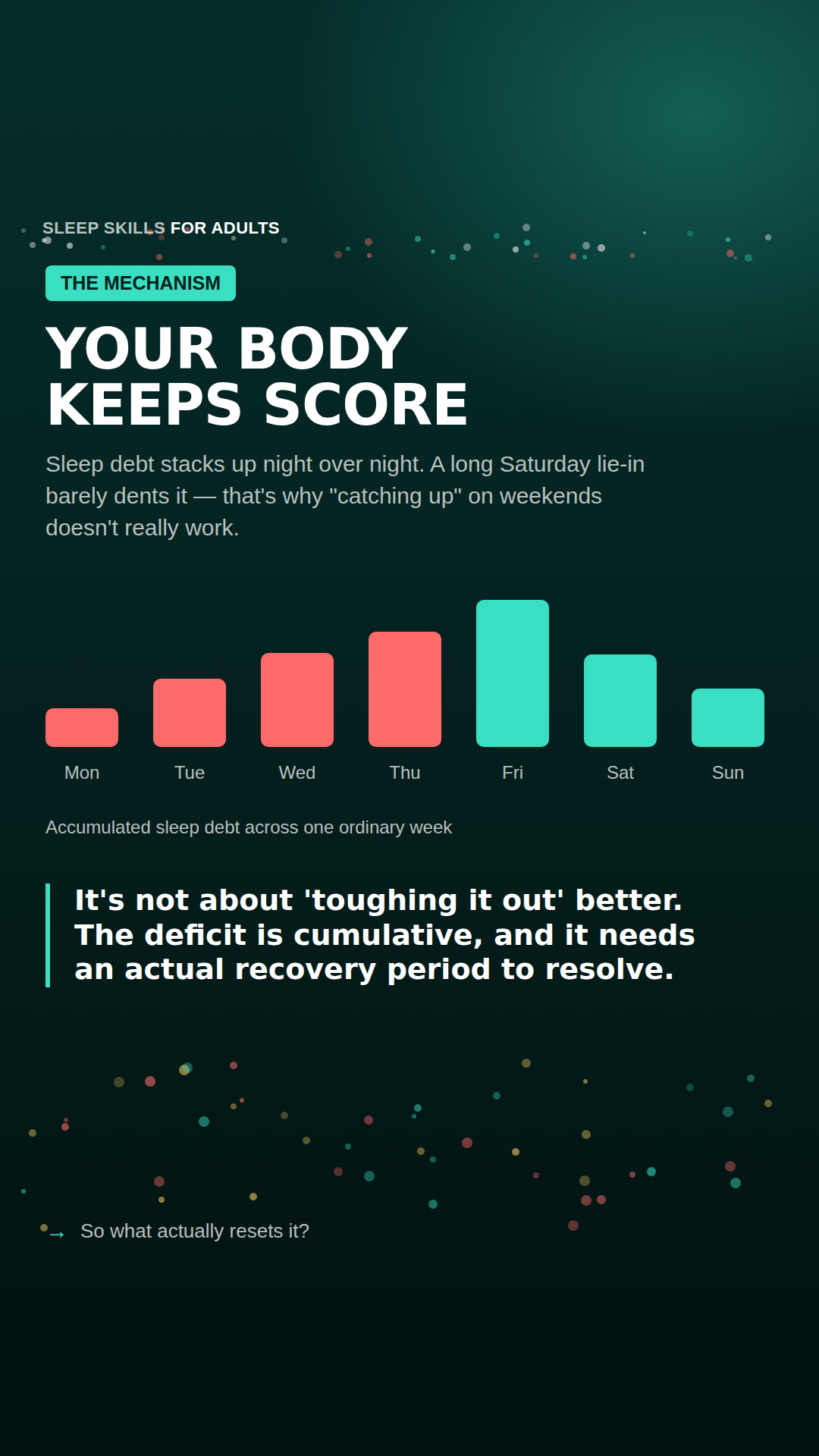
Sleep debt stacks up night over night. A long Saturday lie-in barely dents it — that's why "catching up" on weekends doesn't really work.
It's not about 'toughing it out' better. The deficit is cumulative, and it needs an actual recovery period to resolve.
3 Things That Actually Work
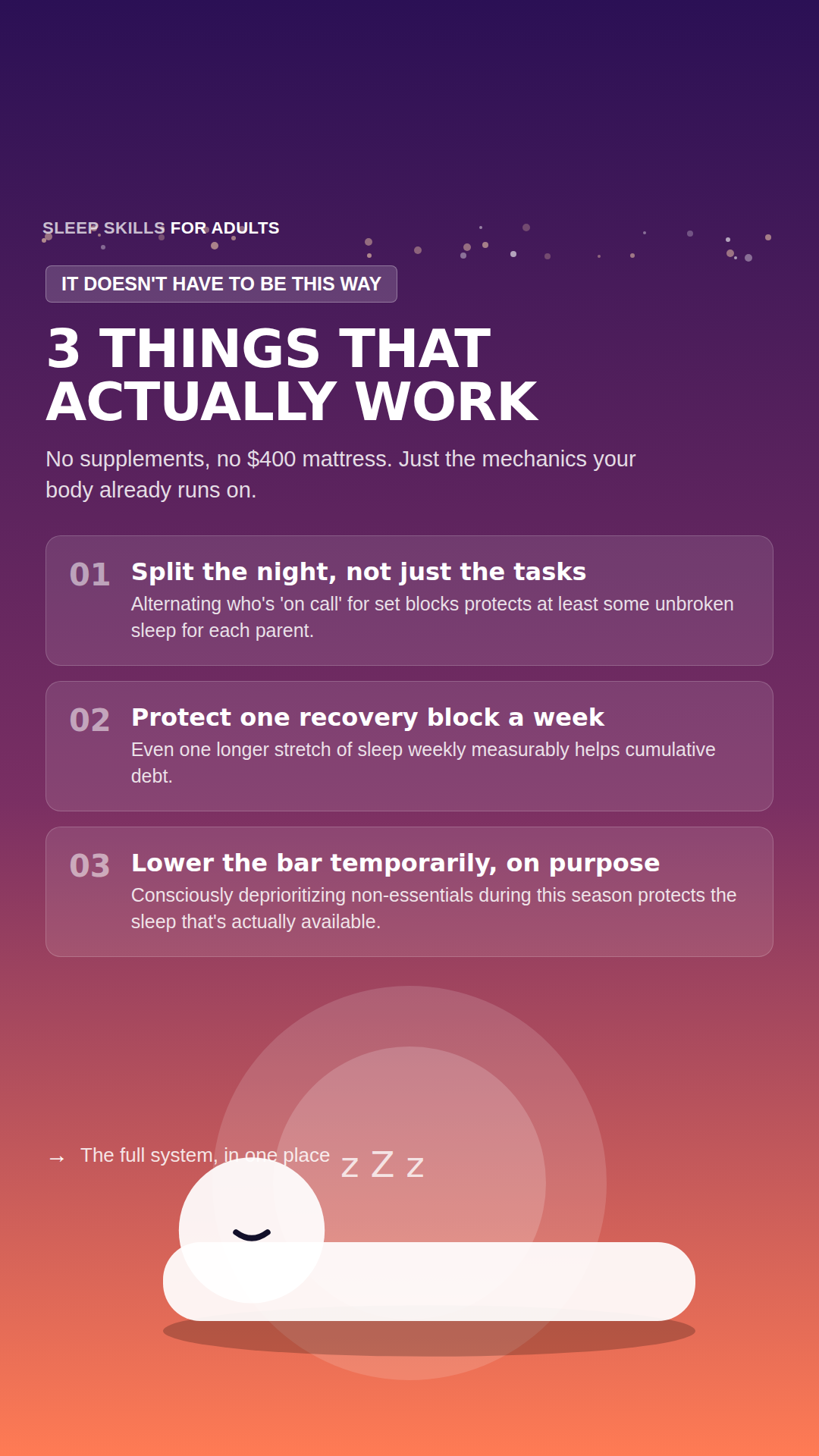
- Split the night, not just the tasks — Alternating who's 'on call' for set blocks protects at least some unbroken sleep for each parent.
- Protect one recovery block a week — Even one longer stretch of sleep weekly measurably helps cumulative debt.
- Lower the bar temporarily, on purpose — Consciously deprioritizing non-essentials during this season protects the sleep that's actually available.
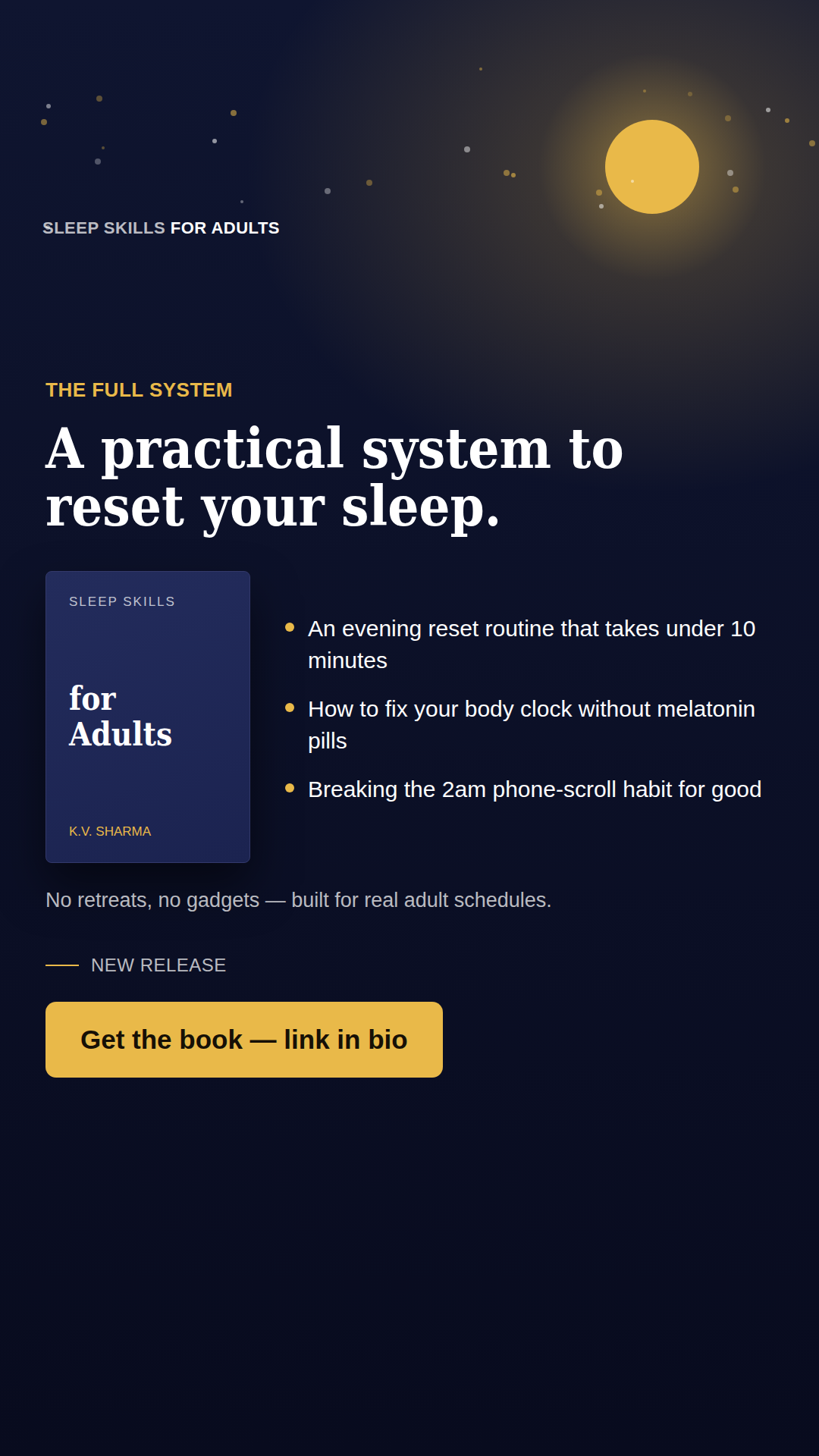
A Practical System to Reset Your Sleep
Sleep Skills for Adults — no retreats, no gadgets, built for real adult schedules. Inside:
- An evening reset routine that takes under 10 minutes
- How to fix your body clock without melatonin pills
- Breaking the 2am phone-scroll habit for good