YES, THIS IS A REAL THING
Obsessing over your sleep score can ruin your sleep.
Sleep researchers call it orthosomnia — the anxious pursuit of 'perfect' sleep that ends up undermining it.
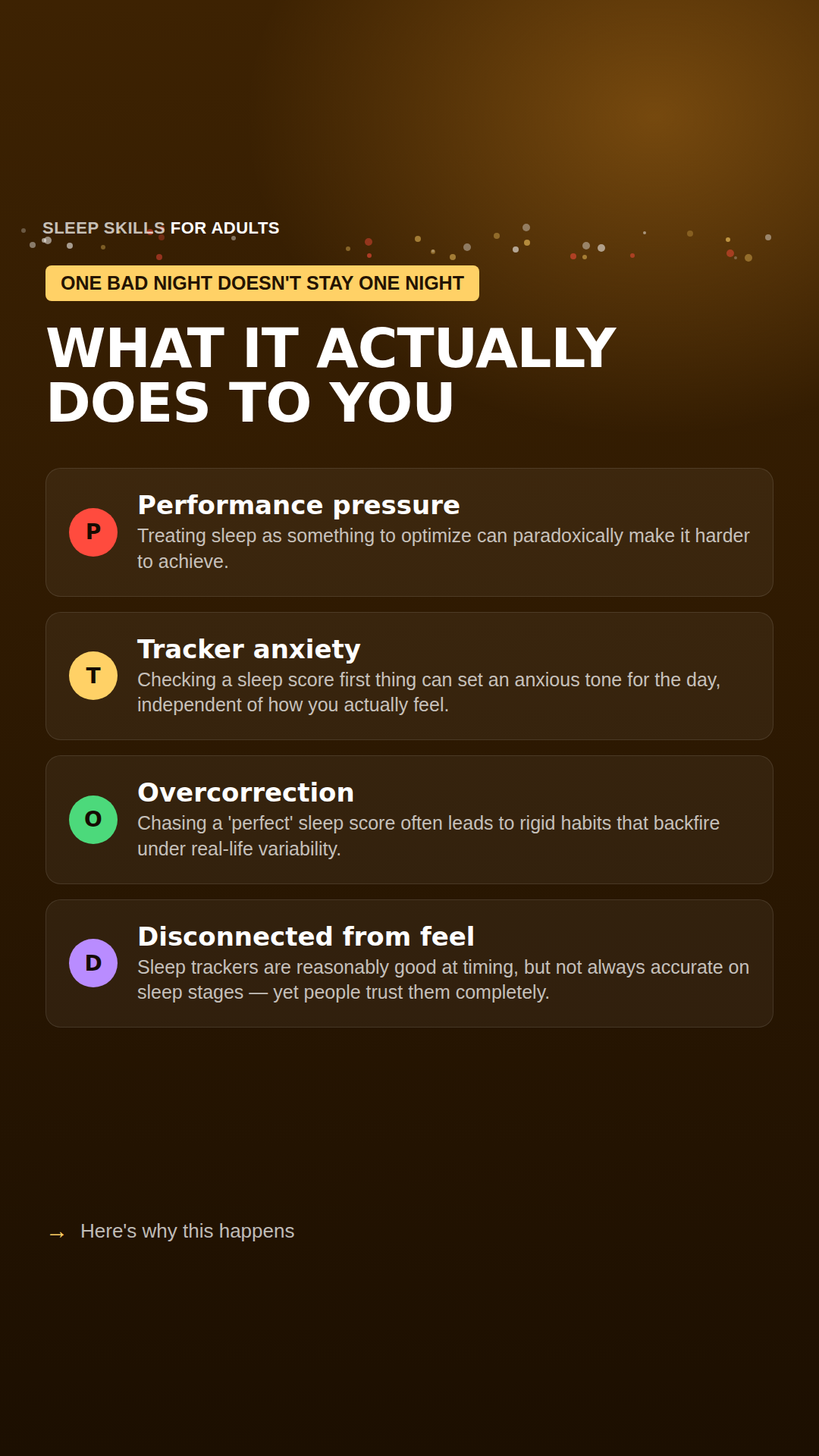
What It Actually Does to You
Performance pressure — Treating sleep as something to optimize can paradoxically make it harder to achieve.
Tracker anxiety — Checking a sleep score first thing can set an anxious tone for the day, independent of how you actually feel.
Overcorrection — Chasing a 'perfect' sleep score often leads to rigid habits that backfire under real-life variability.
Disconnected from feel — Sleep trackers are reasonably good at timing, but not always accurate on sleep stages — yet people trust them completely.
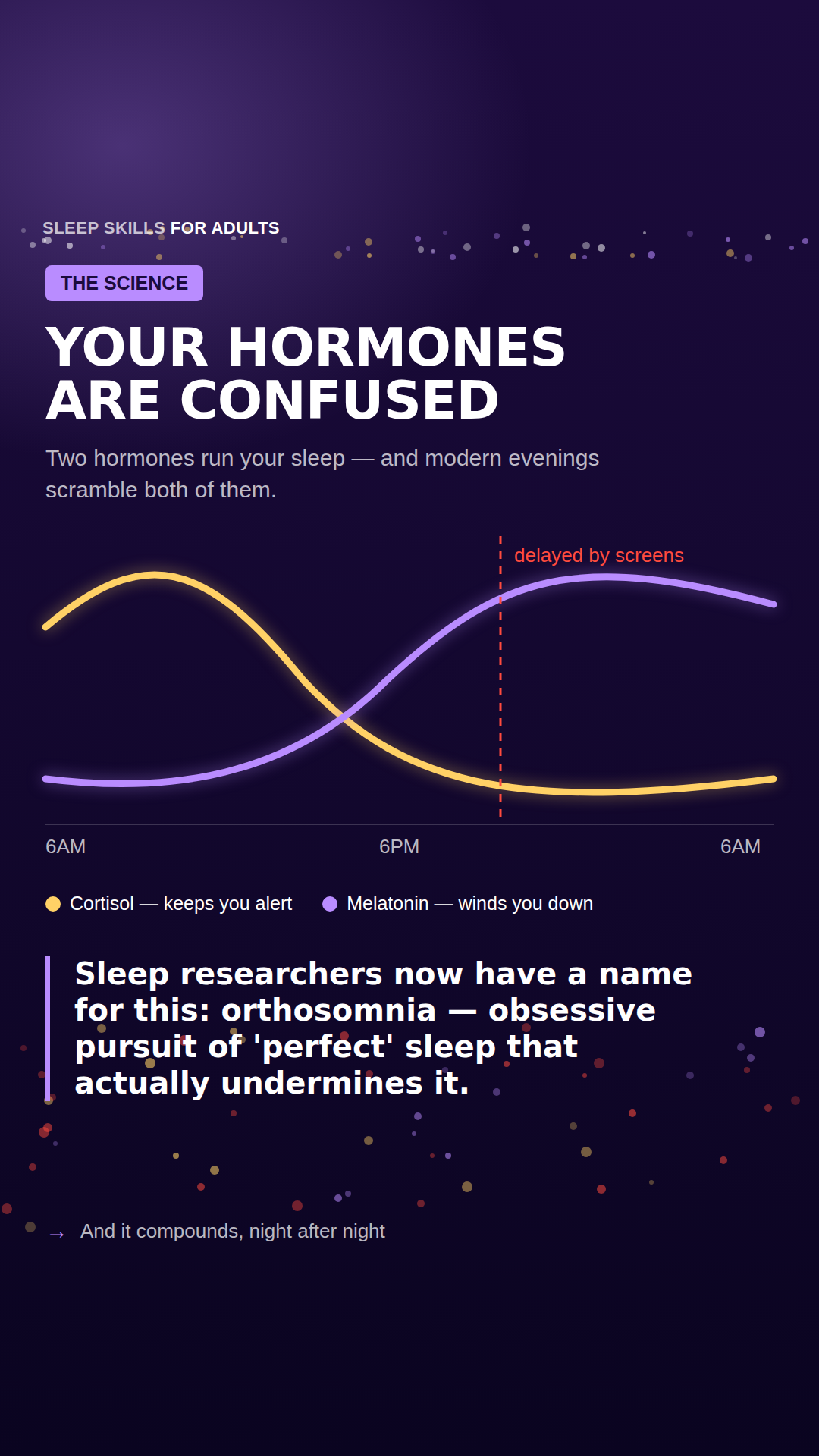
The Science
Two hormones run your sleep — and modern evenings scramble both of them. Cortisol keeps you alert; melatonin winds you down.
Sleep researchers now have a name for this: orthosomnia — obsessive pursuit of 'perfect' sleep that actually undermines it.
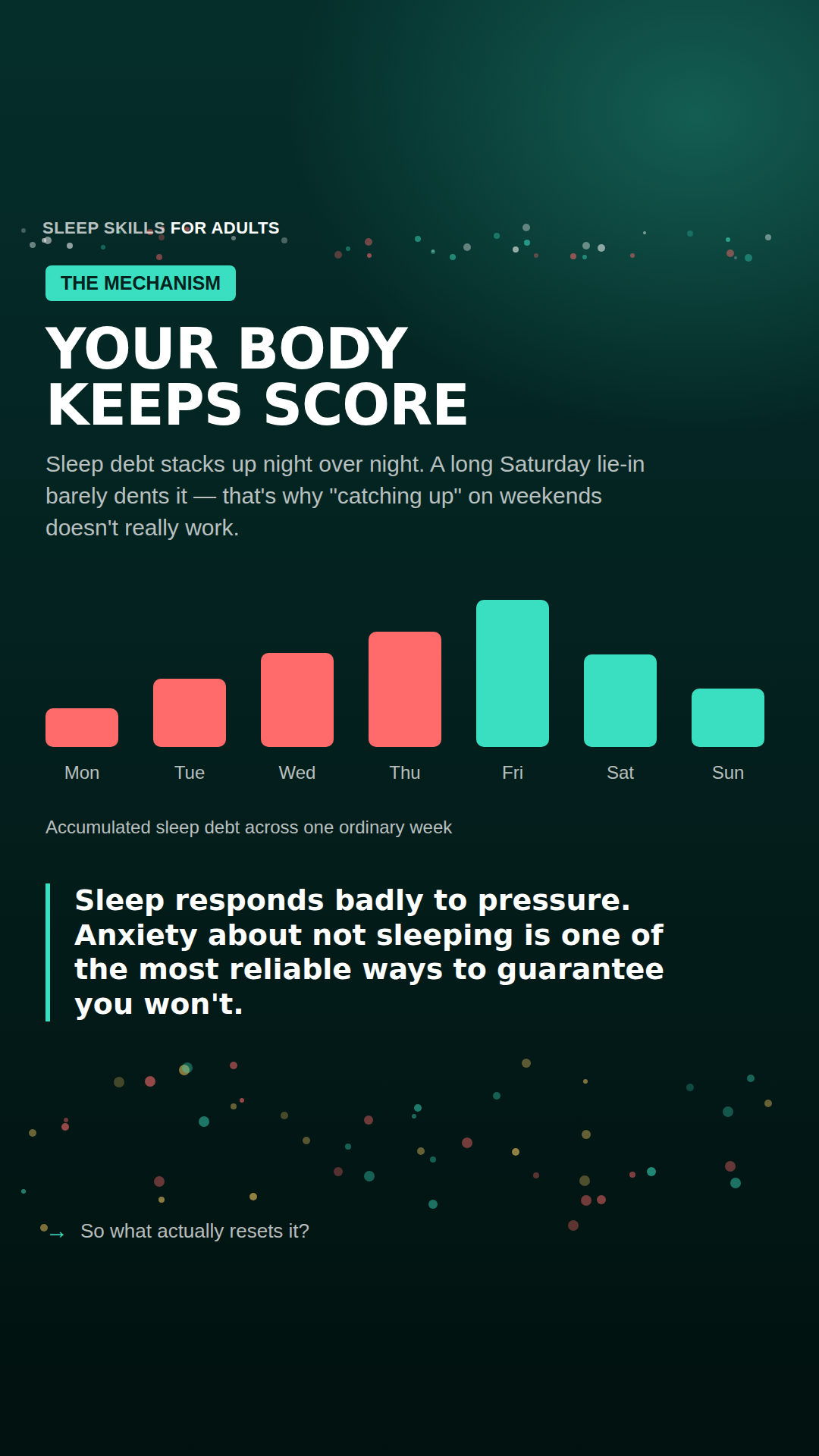
Your Body Keeps Score
Sleep debt stacks up night over night. A long Saturday lie-in barely dents it — that's why "catching up" on weekends doesn't really work.
Sleep responds badly to pressure. Anxiety about not sleeping is one of the most reliable ways to guarantee you won't.
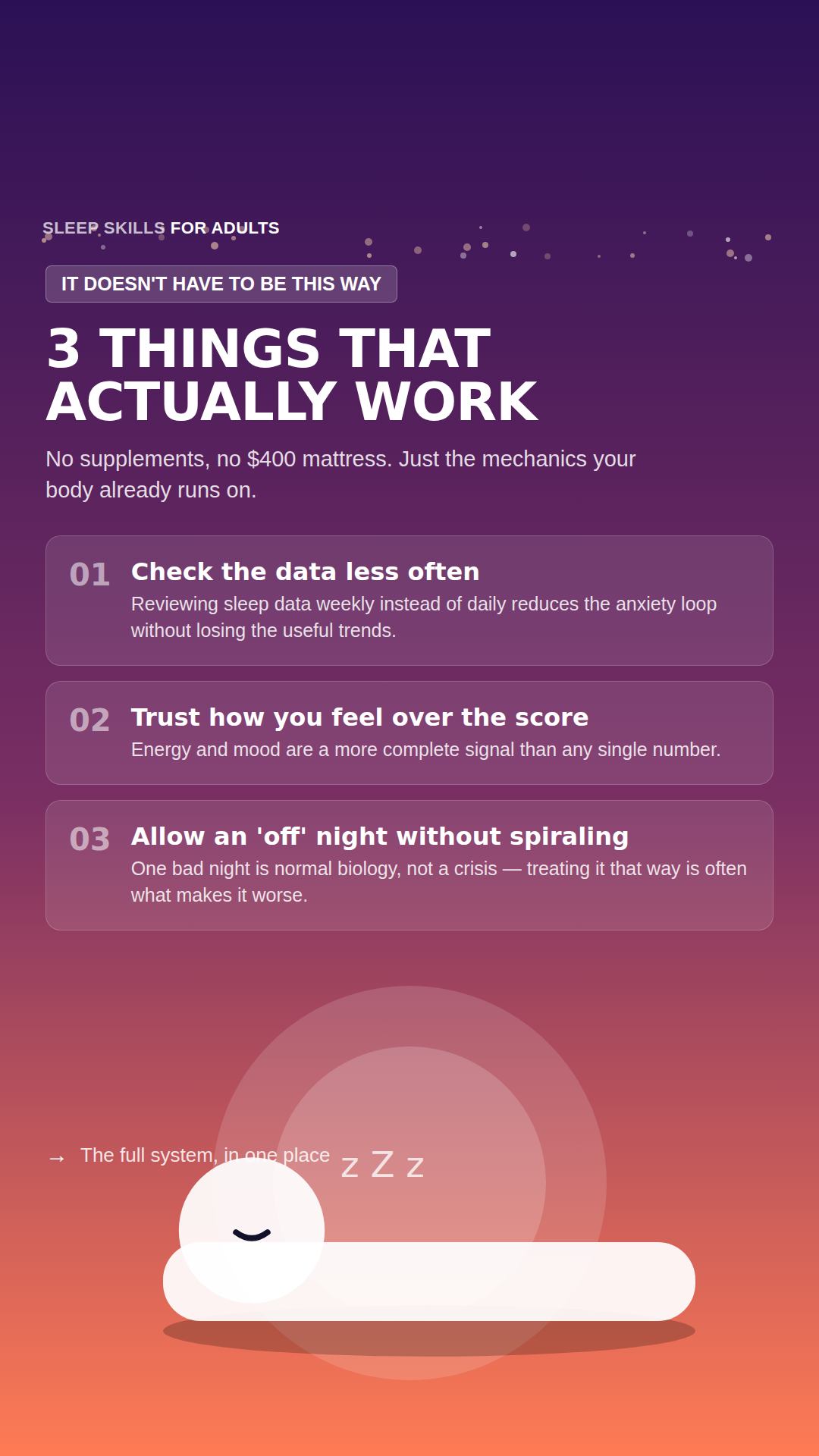
3 Things That Actually Work
- Check the data less often — Reviewing sleep data weekly instead of daily reduces the anxiety loop without losing the useful trends.
- Trust how you feel over the score — Energy and mood are a more complete signal than any single number.
- Allow an 'off' night without spiraling — One bad night is normal biology, not a crisis — treating it that way is often what makes it worse.
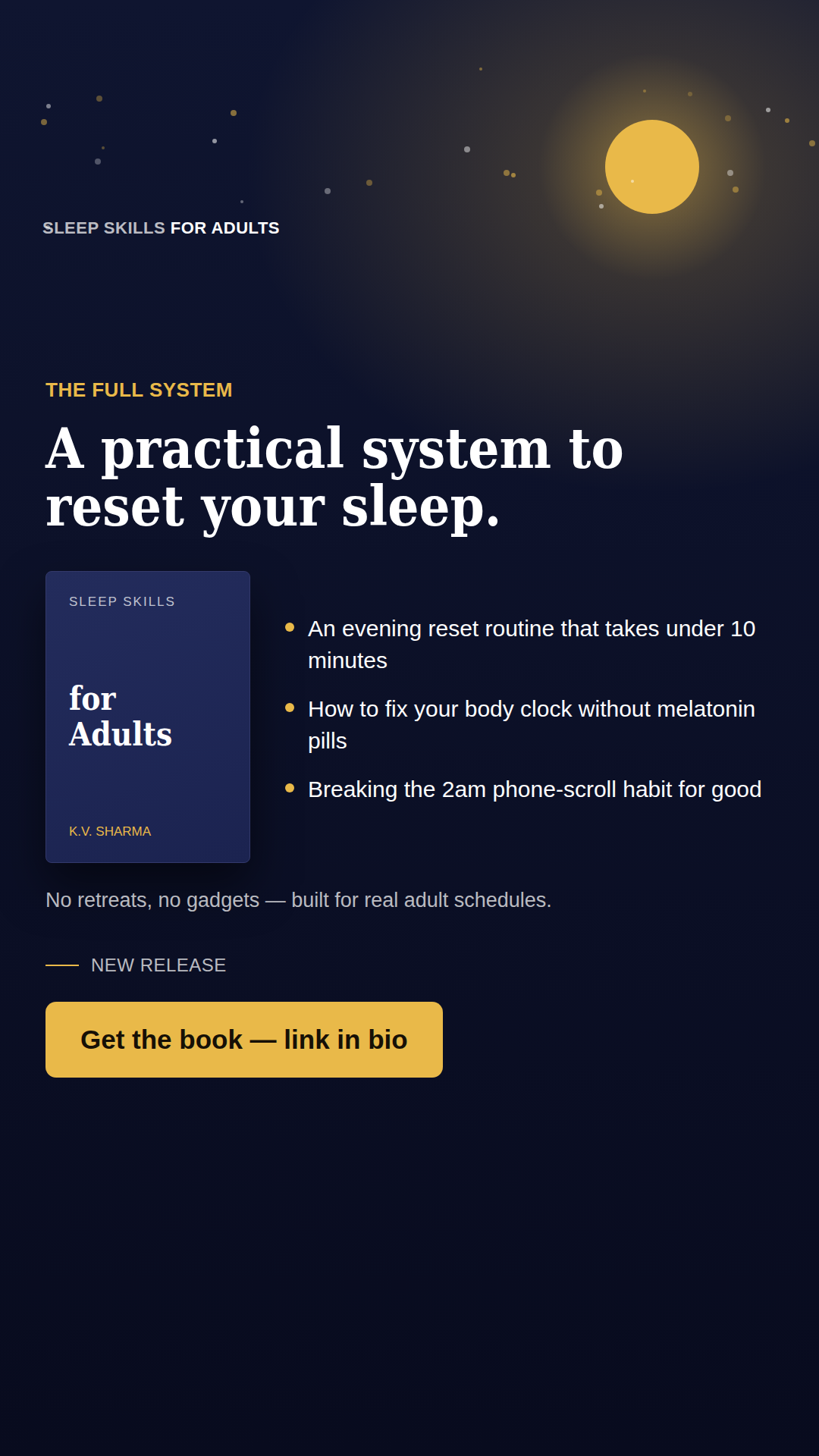
A Practical System to Reset Your Sleep
Sleep Skills for Adults — no retreats, no gadgets, built for real adult schedules. Inside:
- An evening reset routine that takes under 10 minutes
- How to fix your body clock without melatonin pills
- Breaking the 2am phone-scroll habit for good