IT'S NOT JUST 'BEING TIRED'
Your brain's alarm system is running unsupervised.
Sleep loss weakens the brain region that keeps emotional reactions in check — while the threat-detector gets more sensitive.
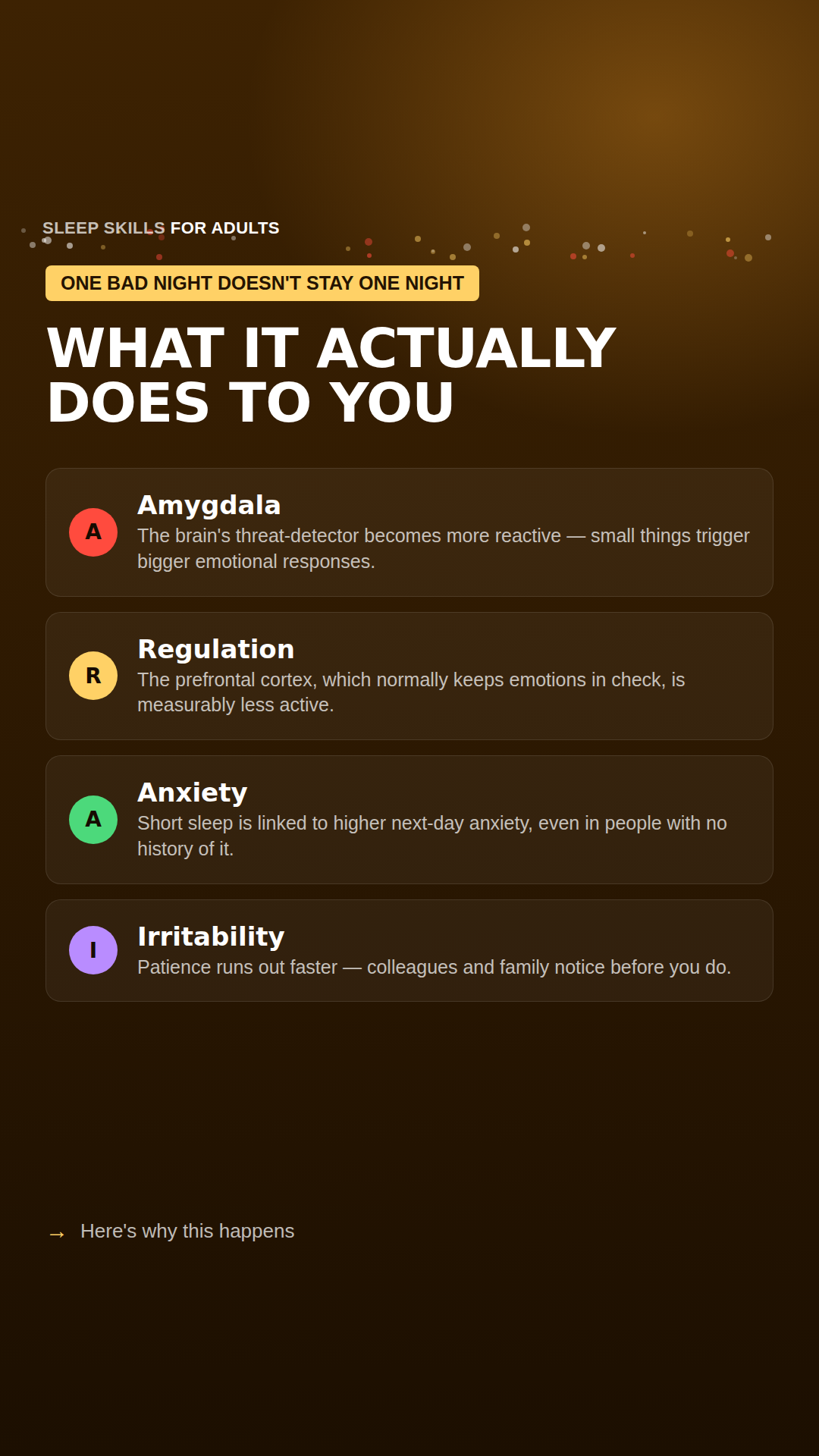
What It Actually Does to You
Amygdala — The brain's threat-detector becomes more reactive — small things trigger bigger emotional responses.
Regulation — The prefrontal cortex, which normally keeps emotions in check, is measurably less active.
Anxiety — Short sleep is linked to higher next-day anxiety, even in people with no history of it.
Irritability — Patience runs out faster — colleagues and family notice before you do.
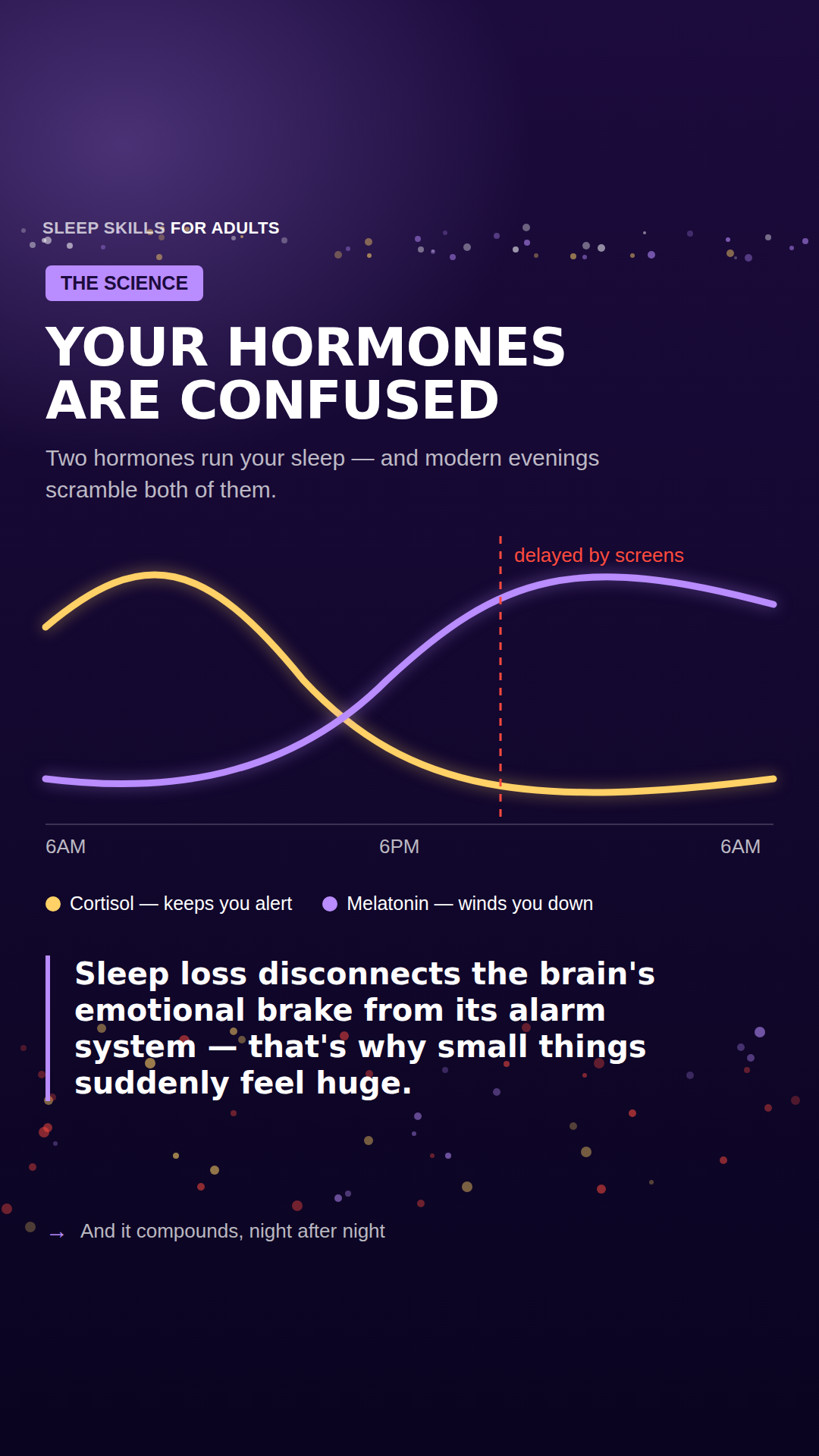
The Science
Two hormones run your sleep — and modern evenings scramble both of them. Cortisol keeps you alert; melatonin winds you down.
Sleep loss disconnects the brain's emotional brake from its alarm system — that's why small things suddenly feel huge.
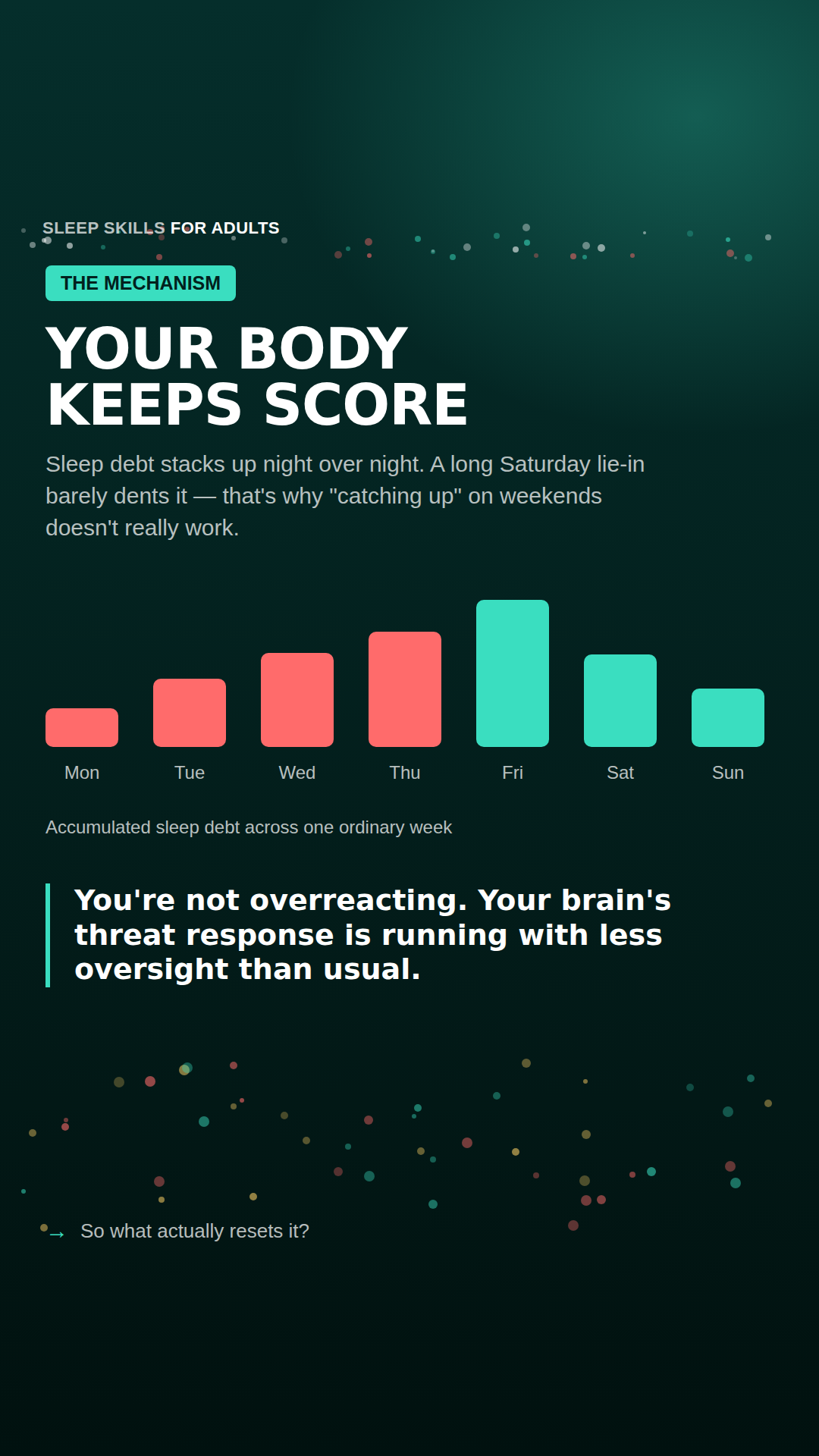
Your Body Keeps Score
Sleep debt stacks up night over night. A long Saturday lie-in barely dents it — that's why "catching up" on weekends doesn't really work.
You're not overreacting. Your brain's threat response is running with less oversight than usual.
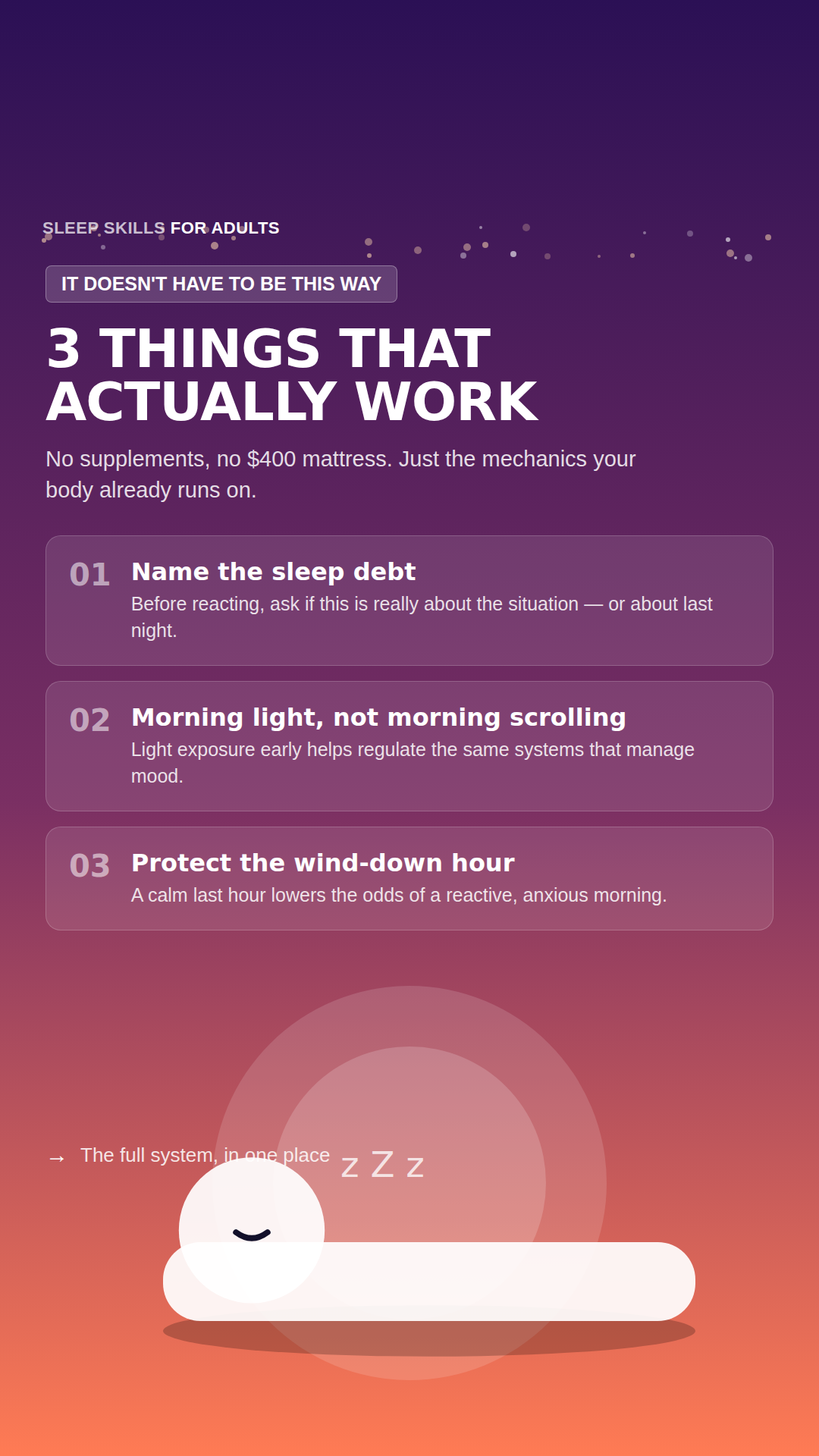
3 Things That Actually Work
- Name the sleep debt — Before reacting, ask if this is really about the situation — or about last night.
- Morning light, not morning scrolling — Light exposure early helps regulate the same systems that manage mood.
- Protect the wind-down hour — A calm last hour lowers the odds of a reactive, anxious morning.
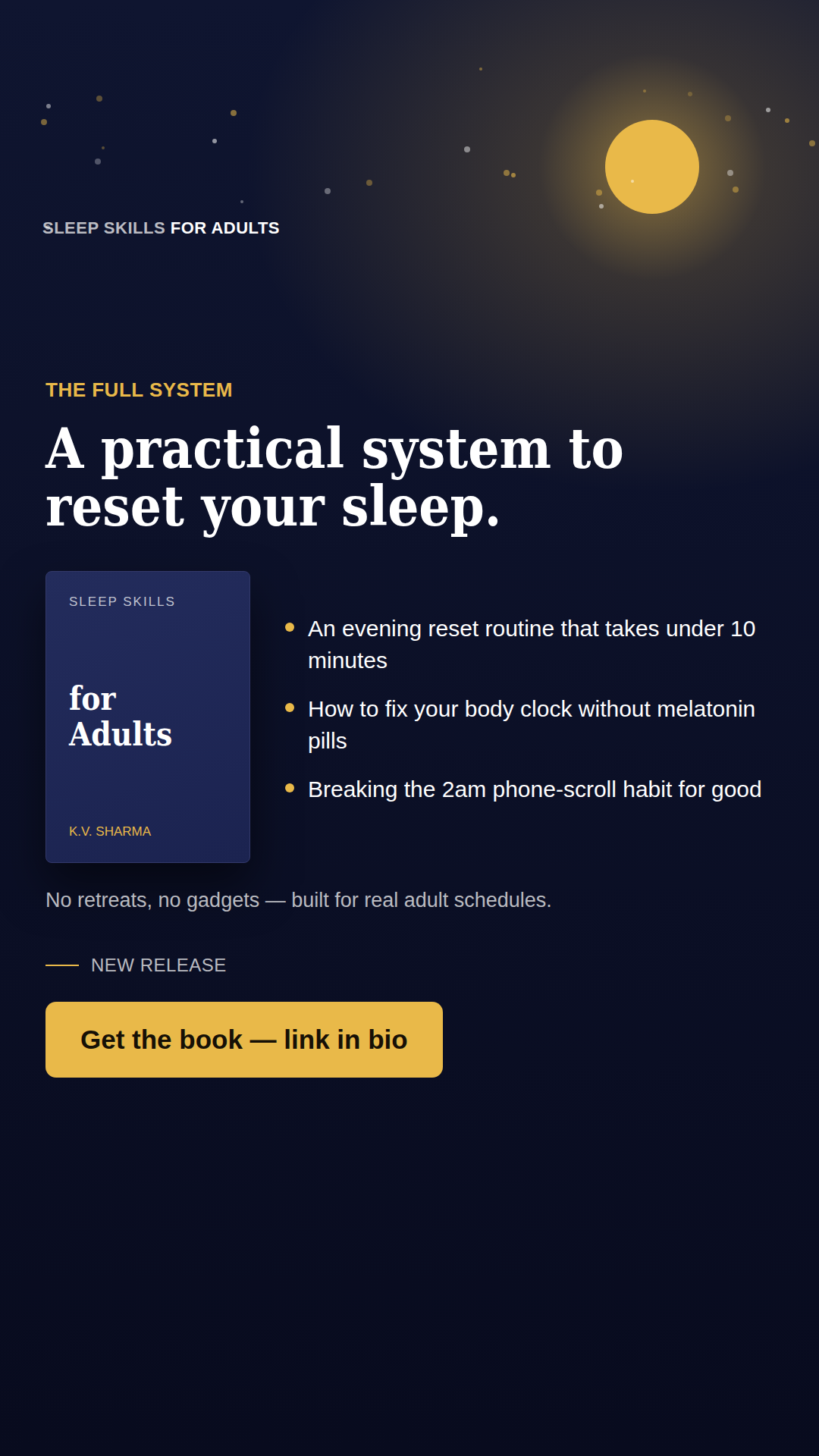
A Practical System to Reset Your Sleep
Sleep Skills for Adults — no retreats, no gadgets, built for real adult schedules. Inside:
- An evening reset routine that takes under 10 minutes
- How to fix your body clock without melatonin pills
- Breaking the 2am phone-scroll habit for good