IT'S NOT JUST TIREDNESS
Jet lag is a light problem, not a sleep problem.
Jet lag is really your internal clock and the local sun being out of sync — not simply a lack of hours slept.
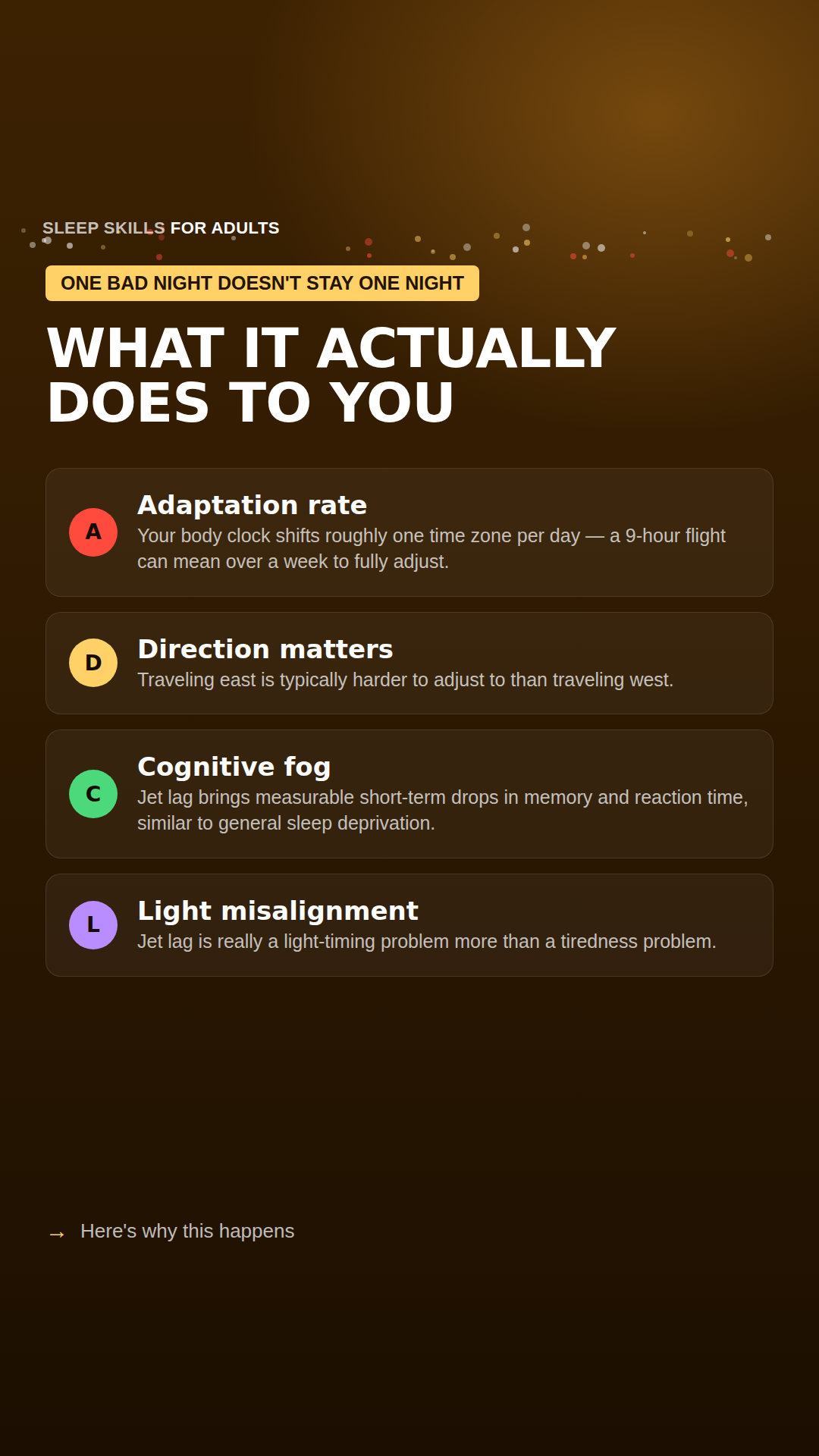
What It Actually Does to You
Adaptation rate — Your body clock shifts roughly one time zone per day — a 9-hour flight can mean over a week to fully adjust.
Direction matters — Traveling east is typically harder to adjust to than traveling west.
Cognitive fog — Jet lag brings measurable short-term drops in memory and reaction time, similar to general sleep deprivation.
Light misalignment — Jet lag is really a light-timing problem more than a tiredness problem.
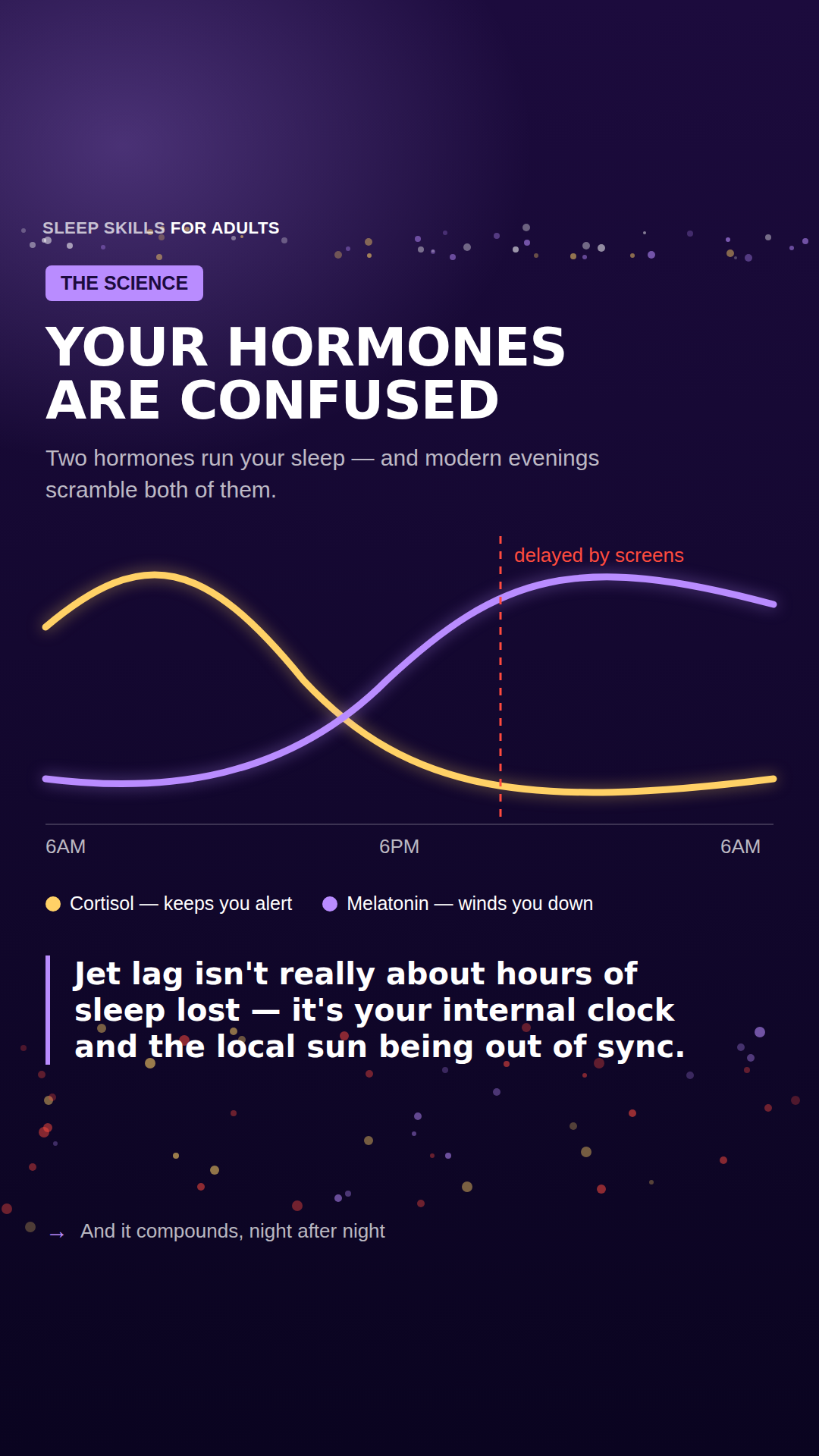
The Science
Two hormones run your sleep — and modern evenings scramble both of them. Cortisol keeps you alert; melatonin winds you down.
Jet lag isn't really about hours of sleep lost — it's your internal clock and the local sun being out of sync.
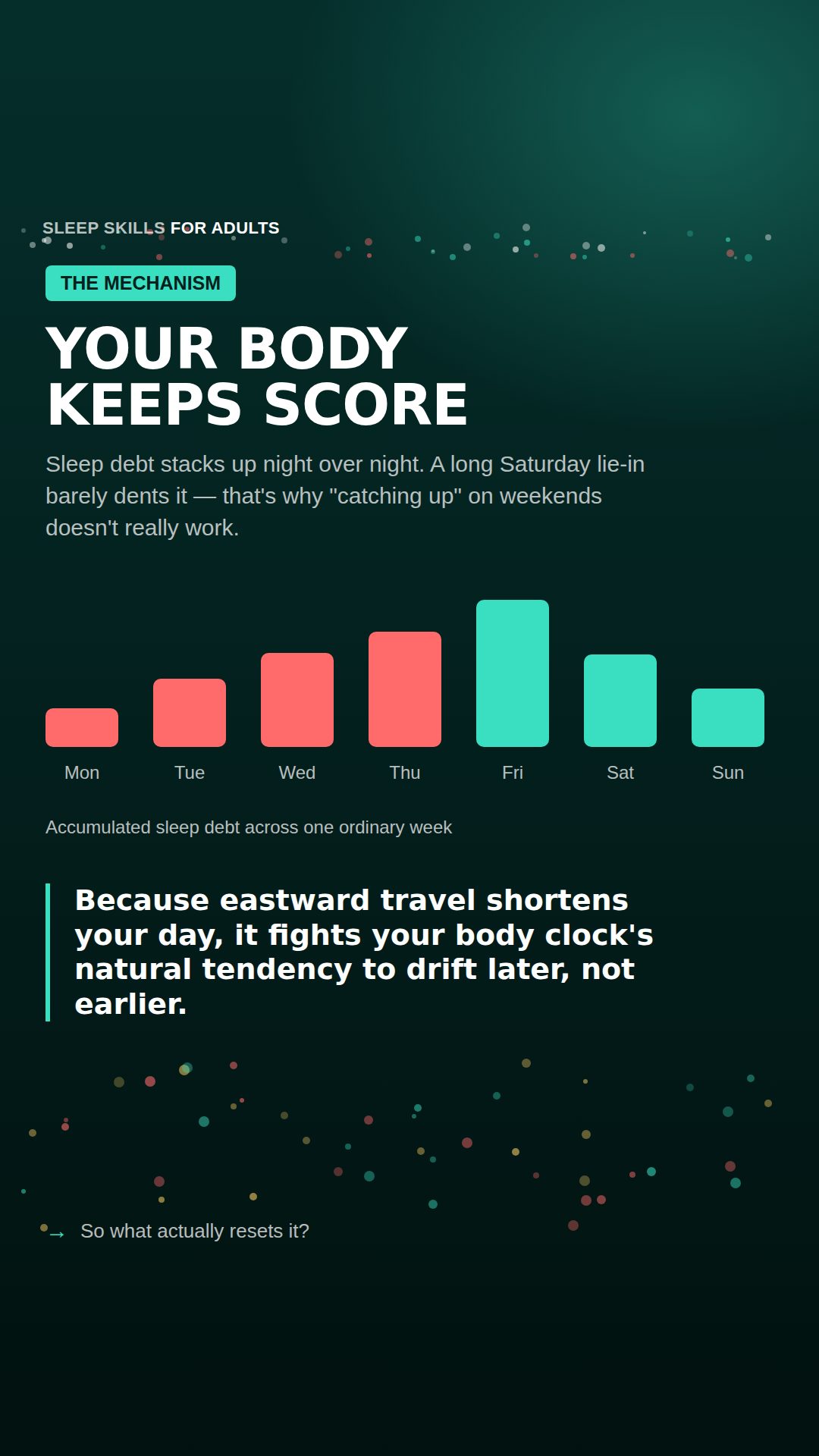
Your Body Keeps Score
Sleep debt stacks up night over night. A long Saturday lie-in barely dents it — that's why "catching up" on weekends doesn't really work.
Because eastward travel shortens your day, it fights your body clock's natural tendency to drift later, not earlier.
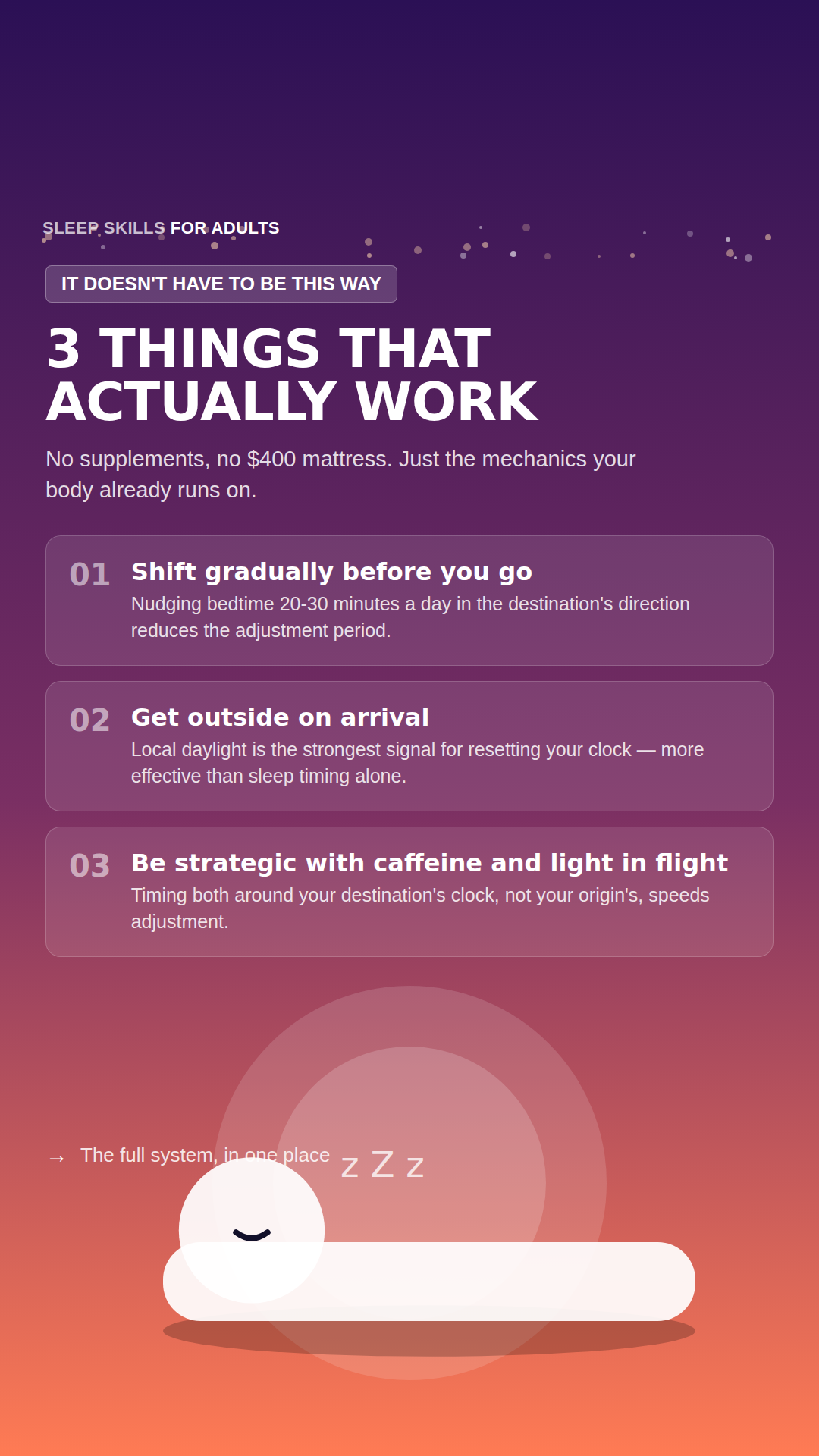
3 Things That Actually Work
- Shift gradually before you go — Nudging bedtime 20-30 minutes a day in the destination's direction reduces the adjustment period.
- Get outside on arrival — Local daylight is the strongest signal for resetting your clock — more effective than sleep timing alone.
- Be strategic with caffeine and light in flight — Timing both around your destination's clock, not your origin's, speeds adjustment.
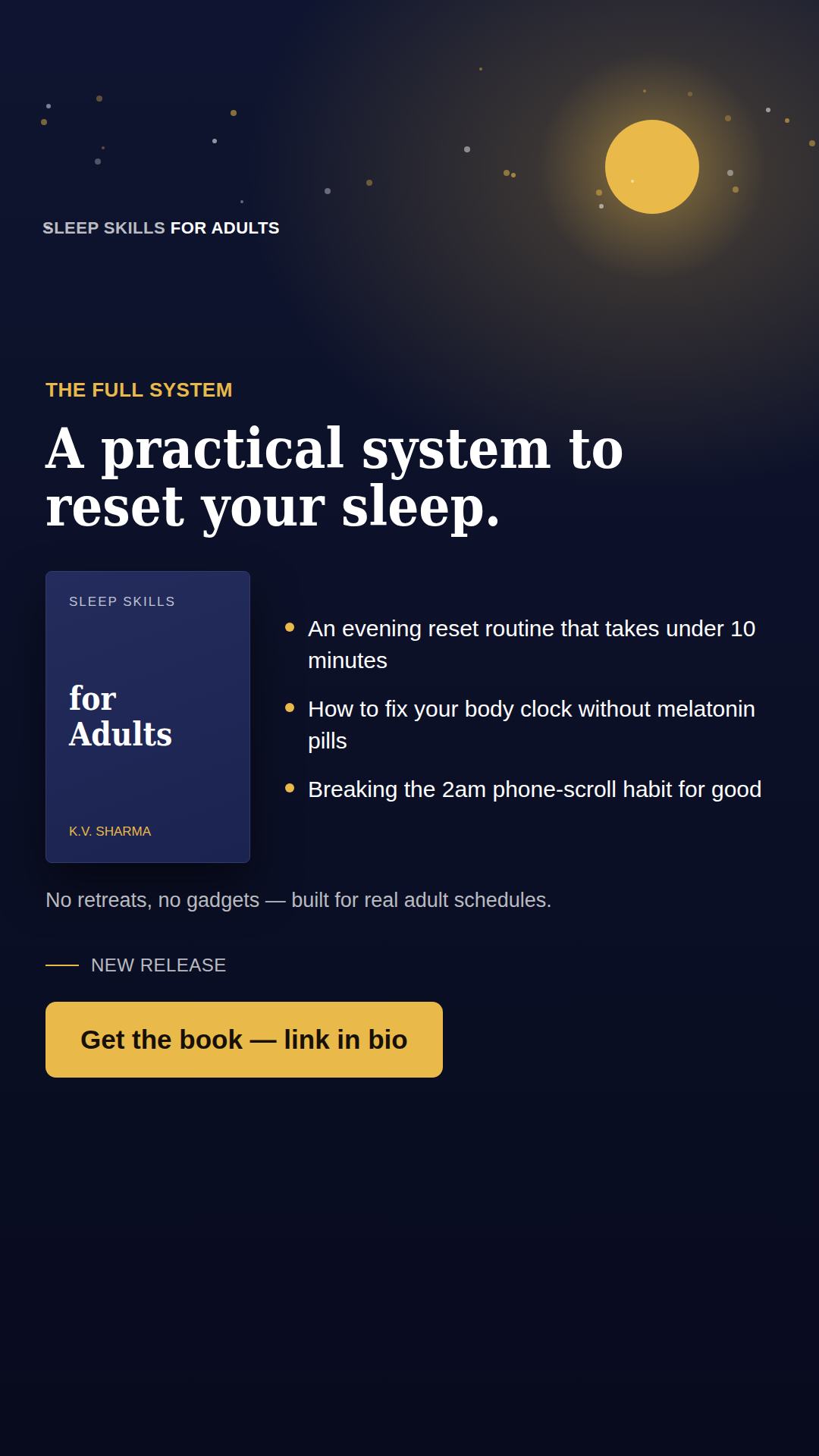
A Practical System to Reset Your Sleep
Sleep Skills for Adults — no retreats, no gadgets, built for real adult schedules. Inside:
- An evening reset routine that takes under 10 minutes
- How to fix your body clock without melatonin pills
- Breaking the 2am phone-scroll habit for good