AS DANGEROUS AS DRUNK DRIVING
Drowsy driving is closer to drunk driving than you think.
Being awake 18 hours straight impairs your driving about as much as the legal blood-alcohol limit.
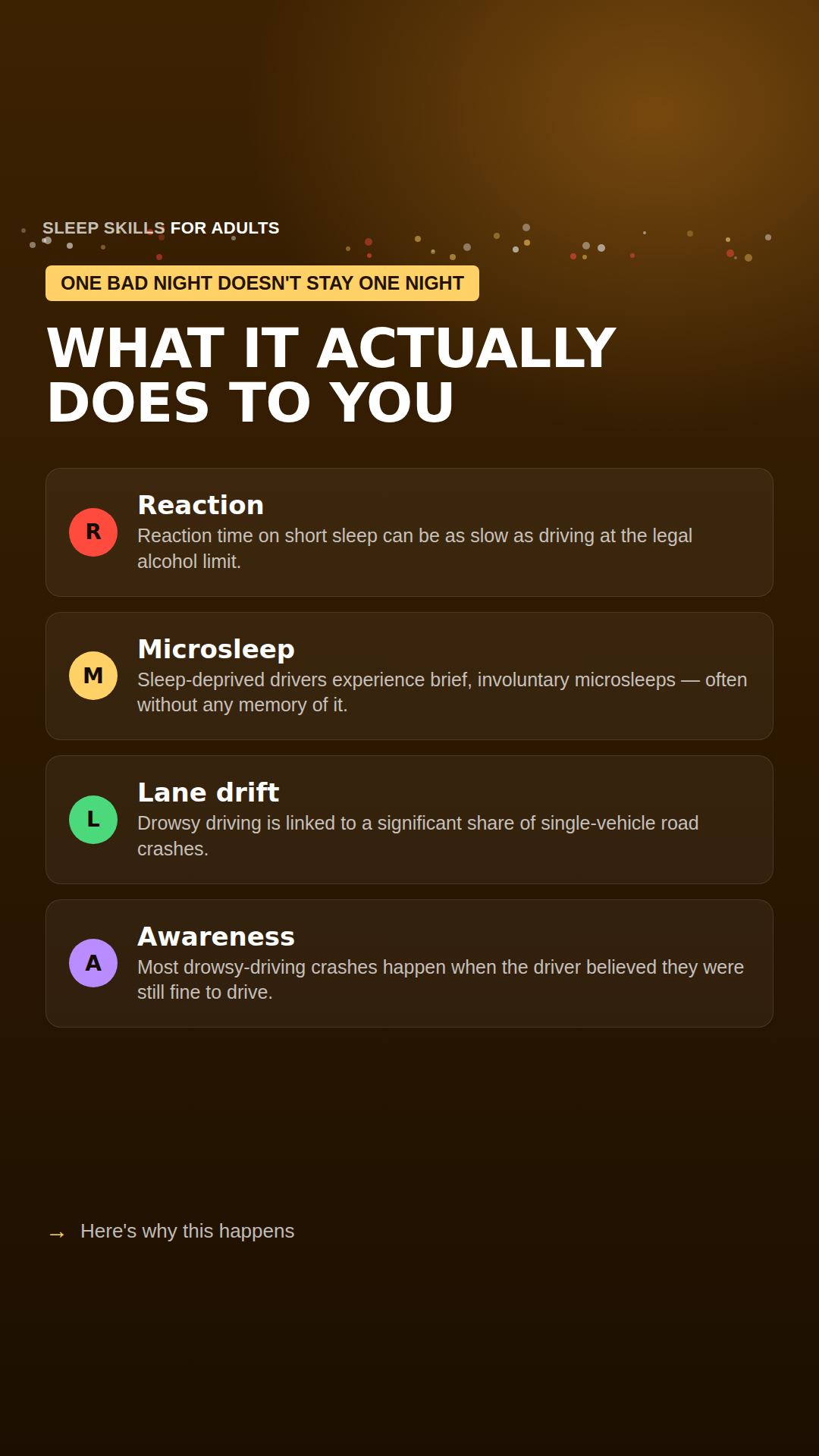
What It Actually Does to You
Reaction — Reaction time on short sleep can be as slow as driving at the legal alcohol limit.
Microsleep — Sleep-deprived drivers experience brief, involuntary microsleeps — often without any memory of it.
Lane drift — Drowsy driving is linked to a significant share of single-vehicle road crashes.
Awareness — Most drowsy-driving crashes happen when the driver believed they were still fine to drive.
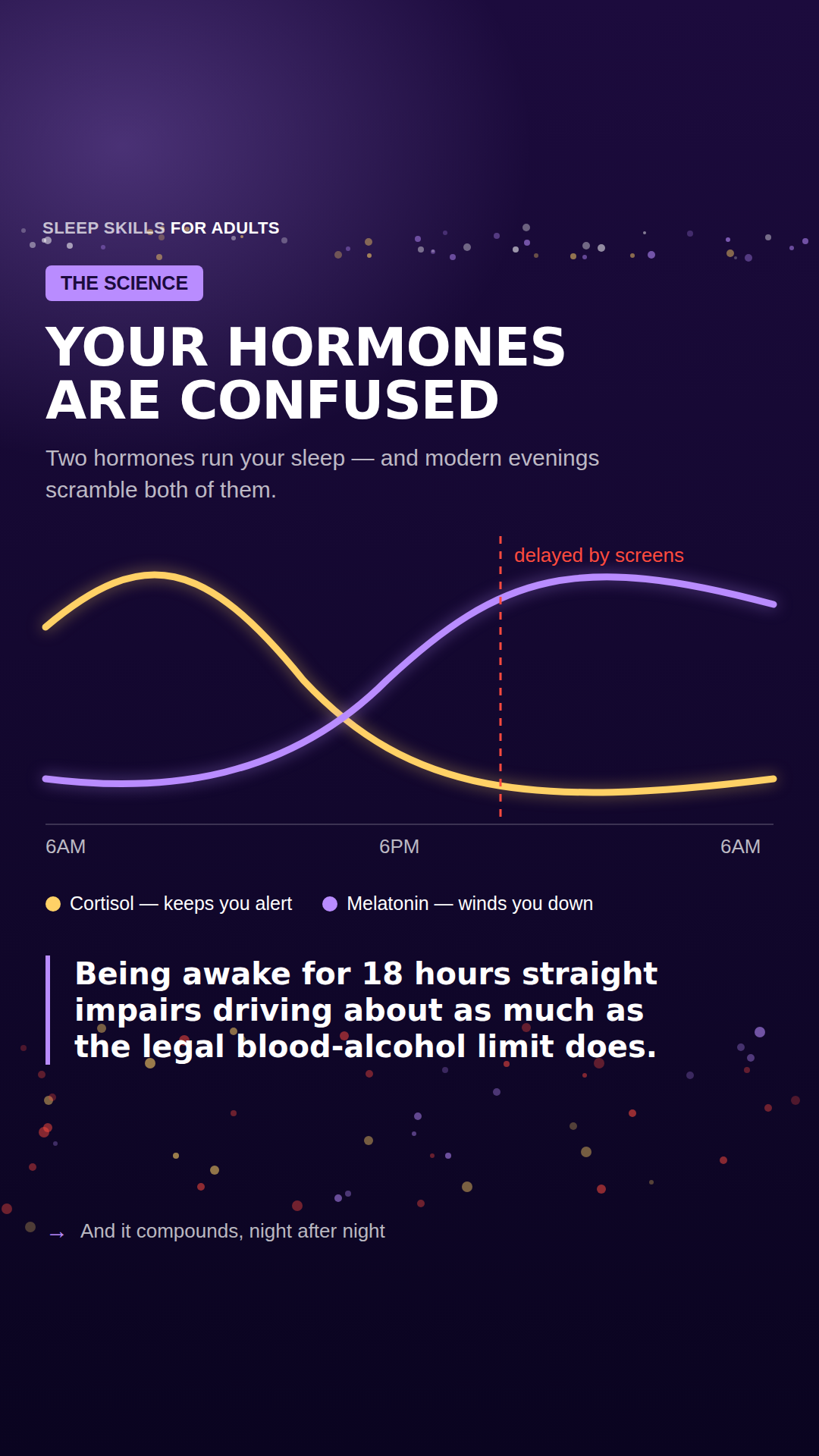
The Science
Two hormones run your sleep — and modern evenings scramble both of them. Cortisol keeps you alert; melatonin winds you down.
Being awake for 18 hours straight impairs driving about as much as the legal blood-alcohol limit does.
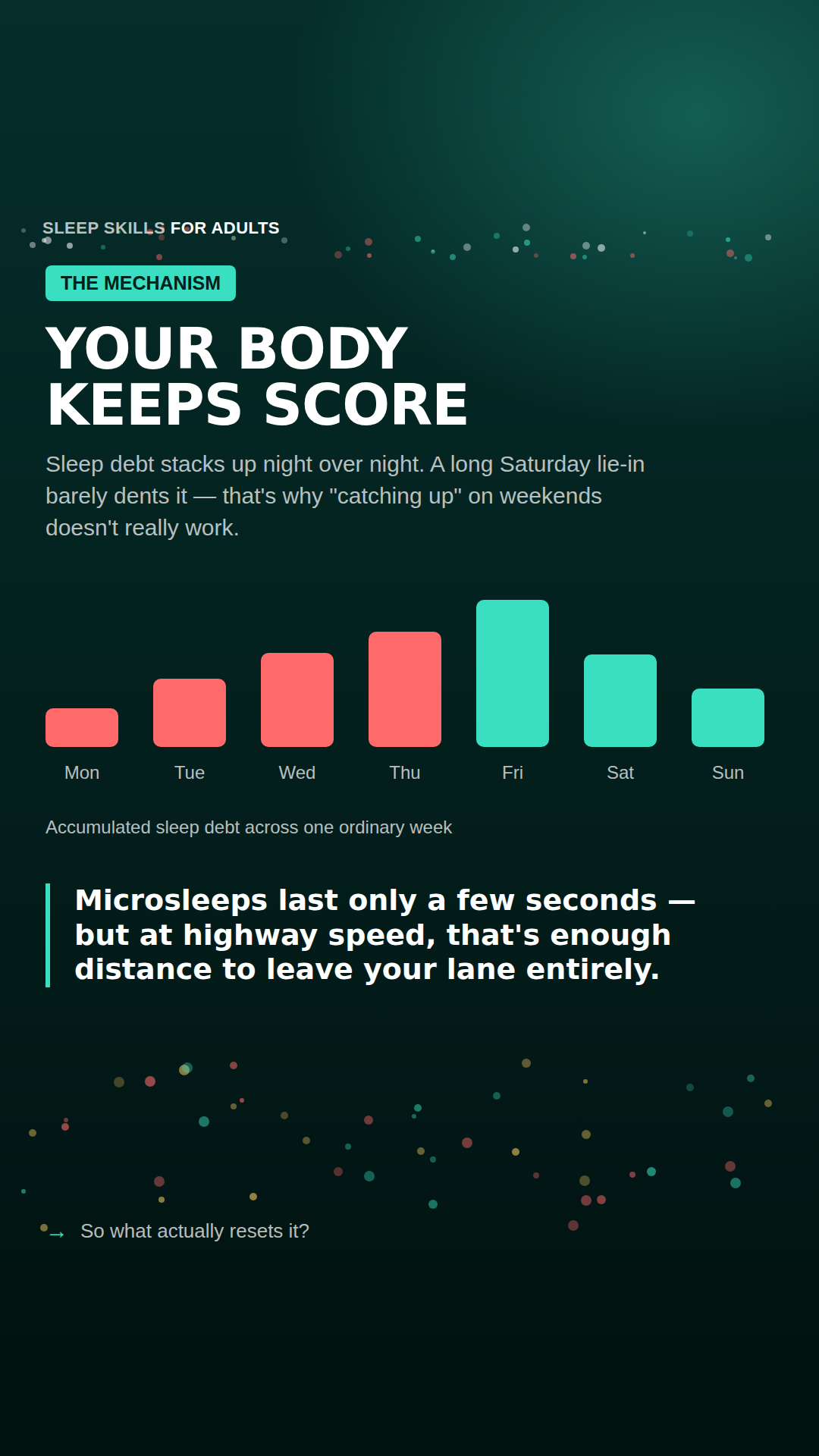
Your Body Keeps Score
Sleep debt stacks up night over night. A long Saturday lie-in barely dents it — that's why "catching up" on weekends doesn't really work.
Microsleeps last only a few seconds — but at highway speed, that's enough distance to leave your lane entirely.
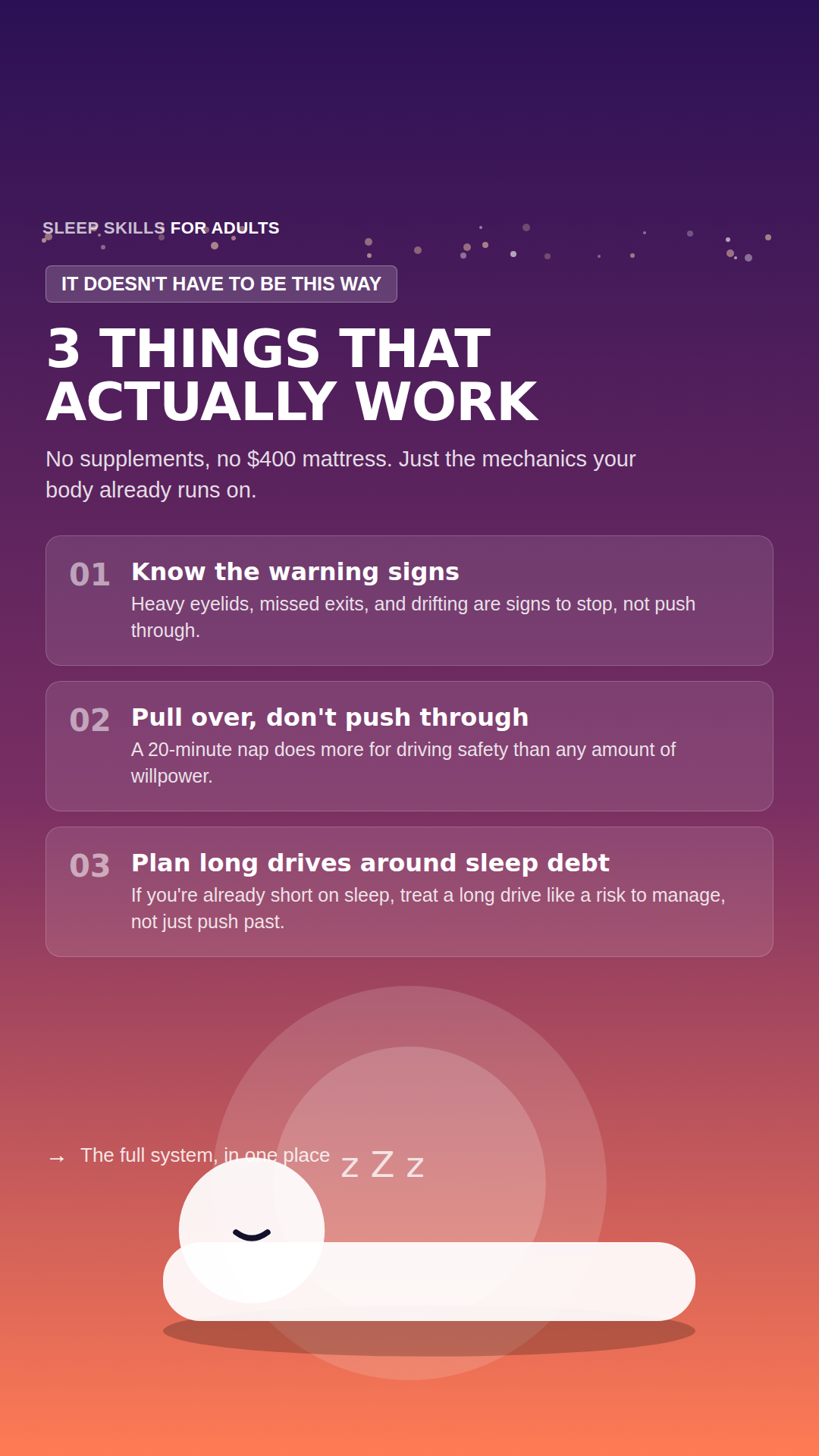
3 Things That Actually Work
- Know the warning signs — Heavy eyelids, missed exits, and drifting are signs to stop, not push through.
- Pull over, don't push through — A 20-minute nap does more for driving safety than any amount of willpower.
- Plan long drives around sleep debt — If you're already short on sleep, treat a long drive like a risk to manage, not just push past.
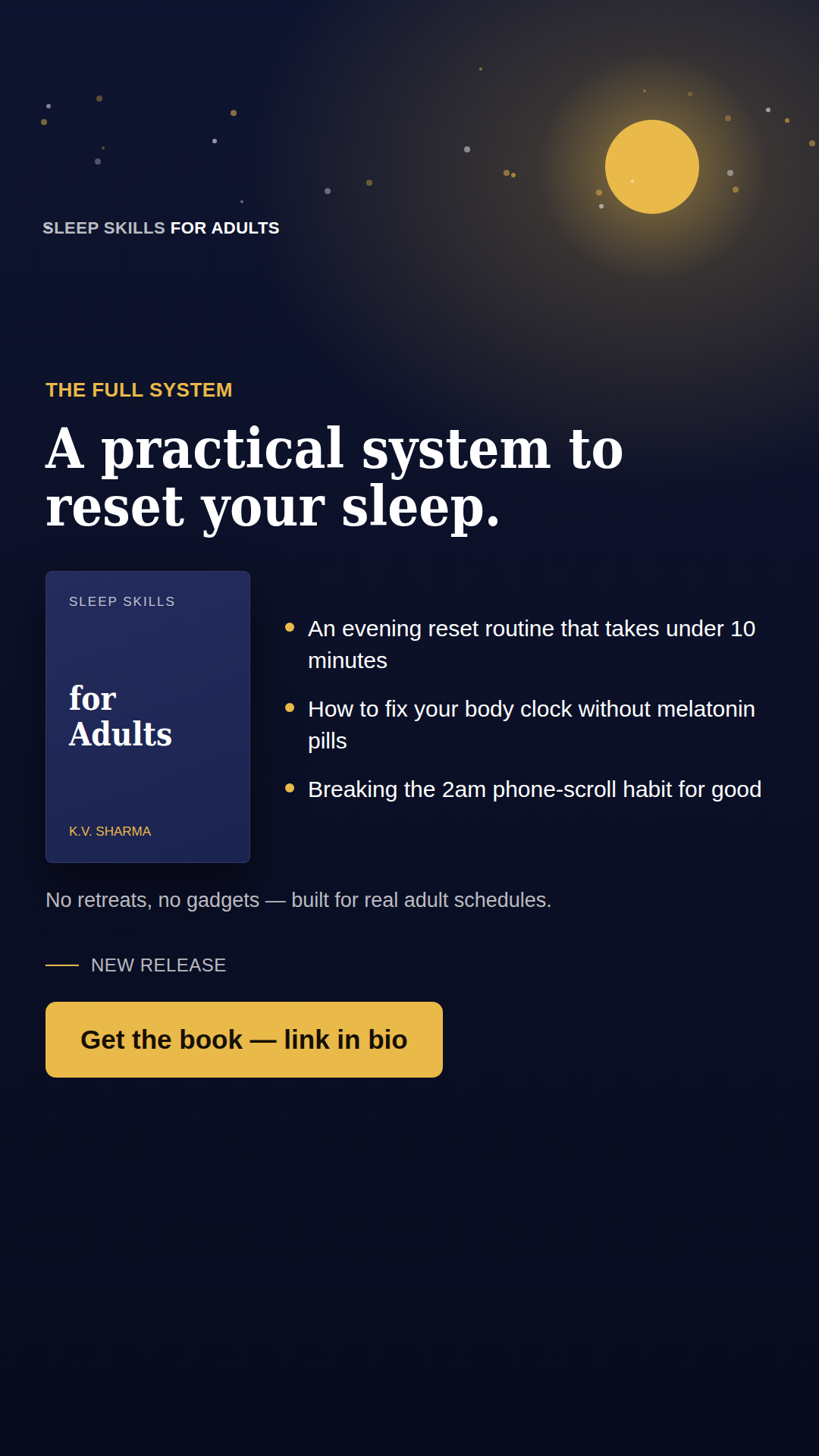
A Practical System to Reset Your Sleep
Sleep Skills for Adults — no retreats, no gadgets, built for real adult schedules. Inside:
- An evening reset routine that takes under 10 minutes
- How to fix your body clock without melatonin pills
- Breaking the 2am phone-scroll habit for good